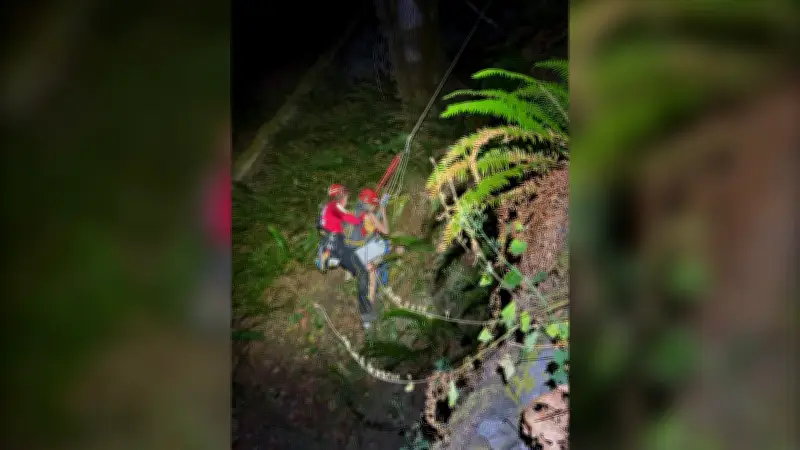
Mid-Island search and rescue (SAR) teams have become the first on Vancouver Island to perform nighttime helicopter hoist rescues, significantly expanding their ability to save lives after dark. The new capability, announced on July 2, 2026, allows teams to conduct hoist operations in low-light conditions, a critical enhancement for remote wilderness rescues.
How the Nighttime Hoist Capability Works
The Arrowsmith Search and Rescue team, based in the Mid-Island region, now operates with night vision goggles and specialized helicopter equipment. This enables them to safely extract injured or stranded individuals from rugged terrain during nighttime hours. Previously, hoist rescues were limited to daylight, forcing teams to wait until dawn or use less efficient ground-based methods.
According to Arrowsmith SAR, the program began after months of training and equipment upgrades funded by provincial grants. The team partnered with a local helicopter company to modify aircraft for night operations, including infrared cameras and enhanced lighting systems.

Impact on Search-and-Rescue Operations
The expansion addresses a critical gap in emergency response on Vancouver Island, where many hiking trails and remote areas are accessible only by helicopter. Nighttime rescues are particularly vital during summer months when hikers may become lost after dark or suffer injuries in isolated locations.
“This capability will save lives,” said Arrowsmith SAR spokesperson in a statement. “We can now respond immediately when someone is in distress, regardless of the time of day.” The team has already conducted several successful nighttime hoist rescues since the program launched, though specific numbers were not disclosed.
Broader Context for Vancouver Island
Other SAR teams on Vancouver Island, including those in Victoria and Nanaimo, are monitoring the program’s success and may adopt similar capabilities. The provincial government has expressed interest in expanding nighttime hoist operations across British Columbia, citing the need for improved emergency services in remote regions.
The initiative also aligns with broader trends in Canadian search-and-rescue, where technology upgrades have reduced response times and increased survival rates. For example, night vision and thermal imaging are now standard in many SAR aircraft nationwide.