Canada's Liberal government has not enacted any policies to fulfill its promise to release 23.6 million barrels of oil onto the global market, part of Ottawa's earlier pledge to participate in a strategic stockpile release among Western allies. This admission came in response to an order paper question from Conservative MP Michael Kram.
Government Confirms No Action Taken
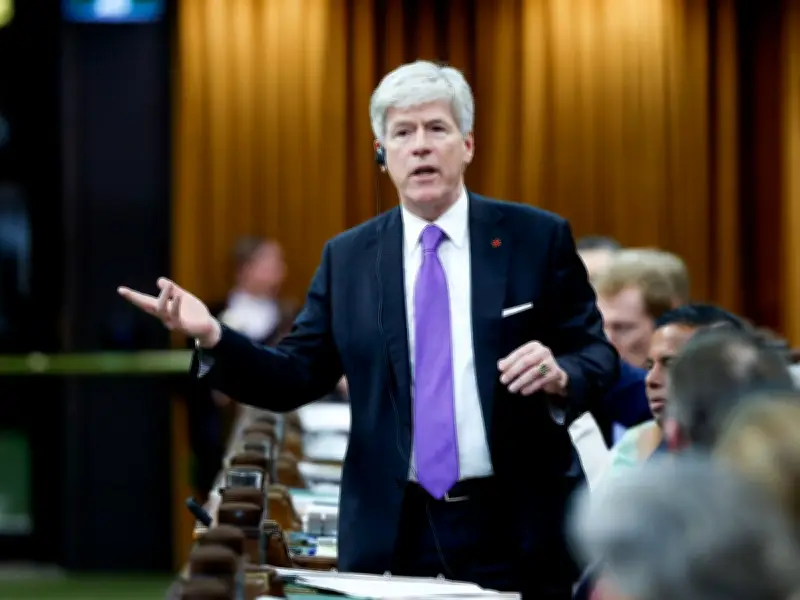
Energy and Natural Resources Minister Tim Hodgson stated in his response to Kram's questions: "The government is not using any legislative, regulatory or policy instruments to contribute to this collective action." This reinforces the hollowness of Ottawa's claim that it could partake in the International Energy Agency (IEA) effort, a promise widely dismissed given Canada lacks a strategic oil reserve.
On March 11, the IEA announced 32 member countries agreed to release 400 million barrels of oil—the largest stockpile release in history—to drive down skyrocketing energy prices after Iran's seizure of the Strait of Hormuz. Two days later, Hodgson announced Canada would add 23.6 million barrels to the mix, saying: "We will support this collective action with 23.6 million Canadian barrels, produced by our industry and co-ordinated with the federal and provincial governments."

Canada's Lack of Strategic Reserve
As an oil exporting nation, Canada is exempt from the IEA's mandatory requirement to hold a strategic stockpile. It remains the only G7 country without one, meaning it cannot release stored supplies during joint international efforts to ease commodity prices. The IEA action followed the closure of the key oil trading corridor, triggering the biggest supply shortage in history and sending oil prices above US$100 per barrel.
The natural resources ministry did not explain what specific role the Canadian government would play in contributing 23.6 million barrels. The department's announcement was vague, stating only that the ramp-up in exports would be "co-ordinated with the federal and provincial governments." Calgary Liberal MP Corey Hogan, in a March interview with CBC, offered no specifics, saying only that the feds were in talks with pipeline firms and provinces.
Production Decisions Rest with Private Sector
Canada's oil output is determined by private-sector producers, who adjust production based on commodity prices, pipeline availability, and maintenance schedules. Those producers did ramp up production in March 2026 after the U.S.-Iran conflict caused oil prices to soar in late February. According to Statistics Canada, Canadian oil producers collectively produced 151.3 million barrels in March, up sharply from 136.2 million barrels the previous month. Production tapered off in April 2026, the latest month with available data, but the federal government expects output to continue climbing.
Conservative MP Kelly McCauley, who originally submitted the order paper question via Michael Kram, highlighted the discrepancy between the government's promise and its inaction. The response from Hodgson underscores that no policies have been introduced to achieve the 23.6 million barrel target, leaving Canada's contribution to the IEA effort effectively unfulfilled.