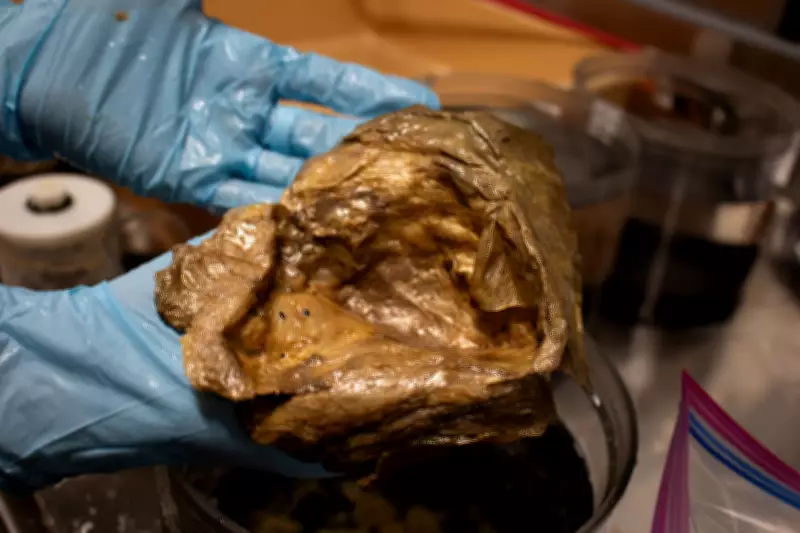
Scientists have finally identified the mysterious golden orb that was discovered deep in the Gulf of Alaska, ending months of speculation. The strange object, which appeared to be a smooth, golden sphere, was found during a deep-sea expedition and immediately sparked curiosity and debate among researchers.
Discovery and Initial Analysis
The golden orb was retrieved from the ocean floor at a depth of approximately 3,000 meters. Initial observations suggested it could be a new species, a geological formation, or even an artifact. The specimen was transported to the Smithsonian Institution for detailed analysis.
Dr. Emily Carter, a marine biologist involved in the study, stated, "We were all amazed by its appearance. It looked like something out of a science fiction movie. Our team worked tirelessly to determine its origin."

Scientific Examination
Using advanced imaging techniques and genetic testing, researchers concluded that the golden orb is actually a type of egg casing from a deep-sea invertebrate. The casing, which is composed of a unique protein matrix, provides protection for developing embryos.
"This is an exciting discovery because it reveals a previously unknown reproductive strategy in deep-sea organisms," explained Dr. Carter. "The golden color is due to the presence of carotenoid pigments, which may help protect the eggs from UV radiation or predators."
Implications for Marine Biology
The identification of the golden orb has significant implications for understanding deep-sea ecosystems. It highlights the incredible diversity of life in the ocean's depths and the many mysteries that remain to be uncovered.
"Every time we explore the deep sea, we find something new and unexpected," said Dr. James Thompson, a deep-sea ecologist. "This discovery underscores the importance of continued ocean exploration and conservation."
Future Research
Scientists plan to conduct further studies on the egg casing to learn more about the species that produced it and the environmental conditions required for its development. The specimen will remain at the Smithsonian for ongoing research and public display.
"We hope that this discovery inspires the next generation of marine scientists," added Dr. Carter. "There is still so much to learn about our oceans."