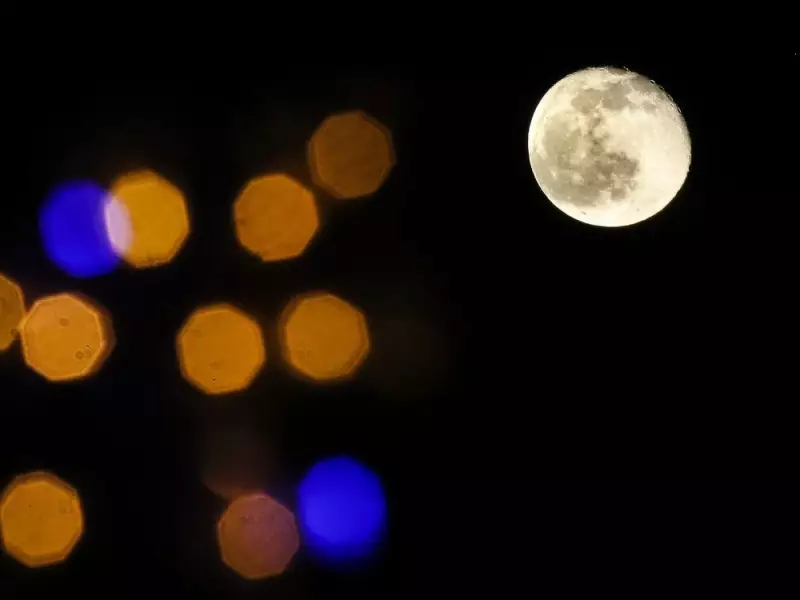
Canadians are in for a stunning celestial treat this week as the final full moon of 2025 promises to be the largest and brightest of the year. This significant lunar event marks the conclusion of the annual astronomical calendar with a visual spectacle.
A Supermoon to Cap the Year
The moon will reach its peak phase on Thursday, December 4, 2025, offering a brilliant display. This is not just any full moon; it is classified as a supermoon, meaning the moon is at its closest point to Earth in its orbit. This proximity will make it appear noticeably larger and shine more intensely than a typical full moon.
According to forecasts, the moon will achieve 100% illumination early on Thursday night. The official peak illumination time is set for 6:14 p.m. Eastern Time. For optimal viewing, look toward the horizon as the moon rises.

Why This Moon Stands Out
The Royal Astronomical Society of Canada explains the science behind the impressive sight. During this supermoon, our celestial neighbour will be approximately 27,000 kilometres closer to Earth than its average distance. This significant shortening of space translates into the moon glowing about 15% brighter in the night sky.
"For most casual observers, the difference is subtle, but it’s more noticeable if compared to a micromoon, when the moon is at its farthest point from Earth," notes The Old Farmer's Almanac. This event is also reported to be the brightest December full moon since 2008.
NASA adds that during a full moon, the lunar body is positioned directly opposite the sun from our vantage point on Earth. This alignment fully illuminates the moon's dayside, presenting a perfect, radiant circle.
Viewing Details Across Canada
If cloudy conditions obscure the view on Thursday, there is a second chance. The moon will remain nearly full, with about 98% of its surface illuminated, on Friday evening and into the early hours of Saturday, just after midnight.
This week's full moon is notably the third in a consecutive series of supermoons, making it a fitting grand finale. Beyond its visual appeal, the supermoon's gravitational pull is expected to generate slightly higher tides than usual along the country's coastlines.
After this event, stargazers will have to wait until the fall of 2026 for the next supermoon to appear. So, make sure to look up and enjoy this last major astronomical show of the year.