Rescuers Conclude Efforts for Stranded Humpback Whale in Baltic Sea
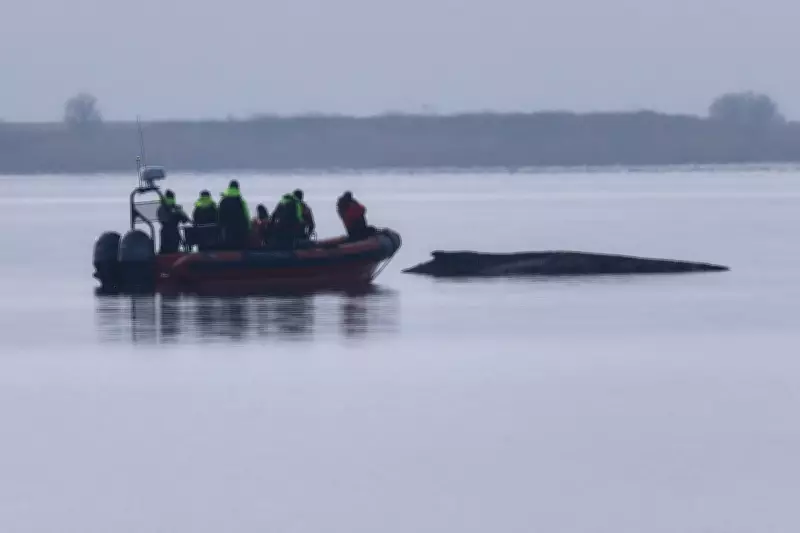
Marine rescue teams have officially abandoned hope for a humpback whale that became stranded in the Baltic Sea near the island of Poel, Germany. The decision marks a sorrowful conclusion to a prolonged effort to save the massive marine mammal, which had been trapped in the shallow waters for an extended period.
A Prolonged and Heartbreaking Struggle
The humpback whale, first reported stranded on Wednesday, April 1, 2026, attracted significant attention from conservation groups and local authorities. Despite continuous monitoring and attempted interventions, the whale remained stuck in the area, unable to free itself. A Greenpeace boat was observed approaching the distressed animal, documenting the grim situation as hopes for a successful rescue dwindled.
The Baltic Sea presents unique challenges for whale rescues, with its relatively shallow depths and limited access to open ocean compared to other regions. These factors complicated rescue operations, making it increasingly difficult for the whale to navigate back to safer, deeper waters.

Environmental and Ecological Implications
Whale strandings in the Baltic Sea are rare but not unheard of, often signaling broader environmental issues. This incident highlights the ongoing pressures faced by marine life in changing oceanic conditions. Experts suggest that such events may become more frequent as climate change alters migration patterns and food availability for large cetaceans.
The stranding has sparked discussions among marine biologists about the health of the Baltic Sea ecosystem. While the exact cause of this particular stranding remains under investigation, potential factors include:
- Navigational errors due to underwater noise pollution
- Illness or injury impairing the whale's ability to swim
- Changes in prey distribution forcing whales into unfamiliar areas
- Geomagnetic disturbances affecting natural migration routes
A Community in Mourning
Local residents and international observers expressed deep sadness over the whale's fate. Social media platforms were flooded with messages of condolence and calls for increased marine protection measures. The incident serves as a poignant reminder of the fragility of marine ecosystems and the urgent need for conservation efforts.
While rescue teams have ceased active intervention, monitoring will continue to document the whale's condition and gather scientific data that may help prevent future strandings. The tragic event underscores the importance of international cooperation in marine conservation and the development of more effective response protocols for stranded marine mammals.