Dutch Elm Disease Declared a Permanent Fixture in Saskatoon's Urban Environment
City authorities in Saskatoon have delivered a sobering announcement: Dutch elm disease, a devastating fungal infection affecting elm trees, is now considered an irreversible presence in the urban forest. Officials state that traditional prevention strategies are no longer viable, marking a significant shift in the city's approach to managing its tree population.
End of an Era for Elm Canopy
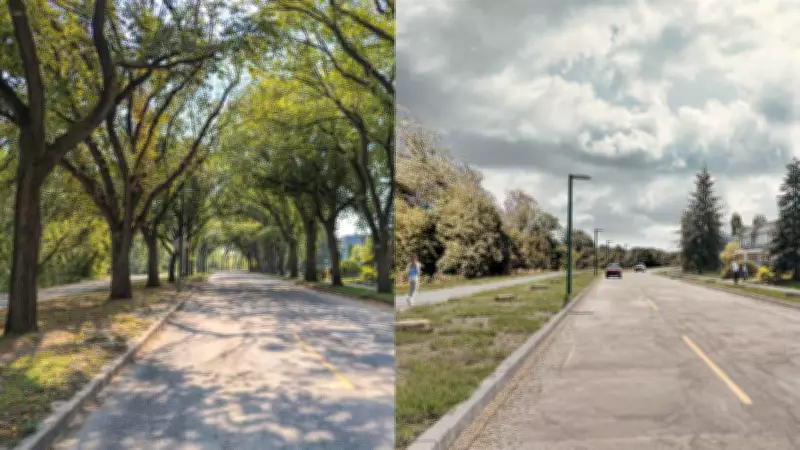
The disease, spread by bark beetles, has led to widespread tree mortality, forcing the city to accept a future without the iconic elm canopy that once defined many neighborhoods. A recent rendering released by the City of Saskatoon illustrates the stark transformation, showing how areas like Spadina will appear devoid of these mature trees. This visual underscores the long-term environmental and aesthetic impacts residents must now confront.
According to forestry experts, the persistence of Dutch elm disease in Saskatoon is attributed to climatic conditions and the high density of susceptible elms, making eradication efforts impractical. "We've reached a point where containment is our only realistic goal," a city spokesperson noted, emphasizing a new focus on managing the disease's spread rather than eliminating it.

Implications for Urban Planning and Ecology
The permanent establishment of Dutch elm disease necessitates a comprehensive reevaluation of Saskatoon's urban forestry policies. Key considerations include:
- Replacing lost elms with diverse, disease-resistant tree species to maintain canopy cover and biodiversity.
- Implementing stricter sanitation measures, such as prompt removal of infected wood, to slow disease transmission.
- Educating the public on signs of infection and reporting procedures to aid in early detection.
This shift also highlights broader challenges in urban ecology, where invasive pests and diseases are increasingly common due to global trade and climate change. Saskatoon's experience serves as a cautionary tale for other municipalities grappling with similar threats to their green spaces.
As the city adapts to this new reality, residents can expect ongoing changes to the urban landscape, with efforts aimed at preserving what remains of the elm population while fostering a resilient and diverse urban forest for future generations.