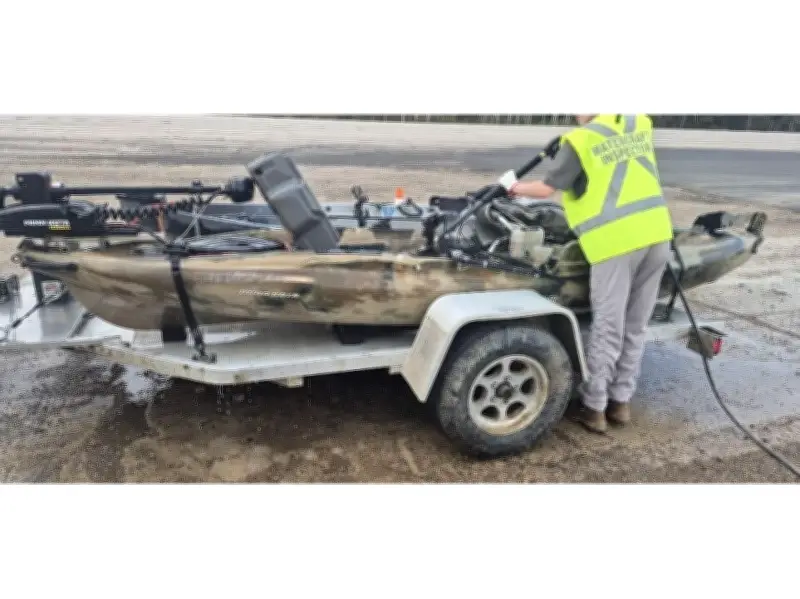
Fisheries and Oceans Canada (DFO), in partnership with the Manitoba government, has completed the first aquatic invasive species (AIS) roadside inspection blitz of the 2026 summer season. The operation took place on Highway 1 (the Trans-Canada Highway) near the Manitoba-Ontario border from May 29 to 31, 2026. This initiative supports efforts to protect freshwater ecosystems and biodiversity by preventing the spread of AIS such as Zebra and Quagga mussels, which can be transported on watercraft and related equipment.
Inspection Results
During the three-day blitz, DFO’s AIS Core Program and fishery officers, along with Manitoba conservation officers, patrol officers, and staff from Manitoba’s AIS program, stopped and inspected a total of 136 westbound vehicles transporting 167 watercraft or related equipment. Of these:
- 99 watercraft were compliant with clean, drain, dry requirements.
- 68 watercraft were not cleaned, drained, or dried and failed the AIS inspection.
- 14 watercraft required decontamination and drivers were provided instructions on how to comply with prevention measures in the future.
- 1 watercraft had visible Zebra Mussels present.
Importance of Prevention
AIS threaten freshwater ecosystems, infrastructure, and the economy by reproducing rapidly, disrupting native habitats, damaging water intake systems, and creating costly challenges for industries and local communities. Preventing the introduction and spread of AIS is essential to safeguarding Canada’s waterways. Ensuring watercraft are properly cleaned, drained, and dried helps prevent AIS from being introduced to, and established in, new bodies of water.

Quotes from Officials
“At the start of the boating season, prevention is our strongest tool against aquatic invasive species. Through this joint inspection blitz with the Government of Manitoba, we are working to prevent the spread of invasive species between waterbodies and protect Canada’s freshwater environments and the communities that depend on them,” said the Honourable Joanne Thompson, Minister of Fisheries.
“Manitoba is proud to work with the federal government to protect our waters from aquatic invasive species. Safeguarding our waters requires a united front with all our partners. By combining resources, expertise, and determination, we’re not just responding to an invasive threat, we’re building a stronger, more resilient future for our lakes and rivers,” added the Honourable Mike Moyes, Manitoba Environment and Climate Change Minister.
Quick Facts
- Aquatic invasive species (AIS) are freshwater or marine plants, animals, algae and micro-organisms introduced outside their natural or past distribution that have significant negative impacts on the environment, economy, society, or human health.
- AIS can pose a serious threat to the biodiversity of Canada’s waters. After habitat loss, invasive species are the biggest threat to global biodiversity. They can grow quickly, compete with native species and alter habitats, and cost billions of dollars annually in damages to infrastructure and revenue loss in Canada.
- Under the Aquatic Invasive Species Regulations, it is illegal to: introduce an aquatic species into a body of water where it is not native, unless authorized by federal, provincial or territorial law; possess, transport, and release Zebra Mussels in Manitoba, Saskatchewan, Alberta and British Columbia; import Zebra Mussels into Canada, except within the transboundary waters of the Great Lakes in Ontario and transboundary waters of Quebec.
- Individuals who violate legislation related to aquatic invasive species may face substantial fines under provincial legislation, as well as a maximum fine of $100,000 for a first offense under the federal Fisheries Act.
For more information on clean, drain, dry and decontaminate procedures, the Aquatic Invasive Species Regulations, or how to identify and report an aquatic invasive species, visit the DFO or Province of Manitoba websites.