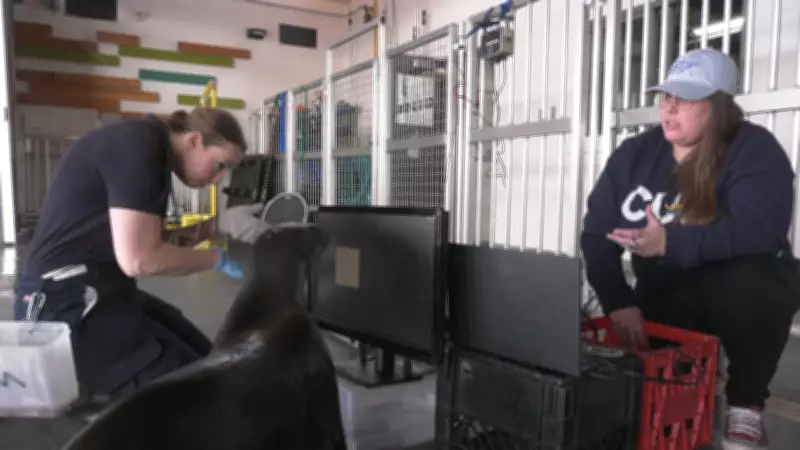
Concordia University and Edmonton Valley Zoo Collaborate on Groundbreaking Seal Vision Study
Researchers from Concordia University are partnering with Edmonton Valley Zoo in a pioneering study aimed at understanding how northern fur seals perceive their environment. The research focuses on cognitive behavior to uncover insights into marine mammal vision and sensory processing.
Investigating Marine Mammal Perception
The study involves northern fur seals at Edmonton Valley Zoo participating in controlled cognitive behavior experiments. These tests are designed to reveal how seals interpret visual information, navigate their surroundings, and interact with objects in their habitat. The research team is particularly interested in how seals' vision adapts to both aquatic and terrestrial environments, given their amphibious nature.
This collaboration represents a significant step in marine mammal research, combining academic expertise with zoo facilities to conduct non-invasive behavioral observations. The findings could have broader implications for understanding sensory adaptations in marine animals and informing conservation strategies.

Methodology and Objectives
The cognitive behavior study employs various stimuli and tasks to assess visual perception and problem-solving abilities in northern fur seals. Researchers monitor responses to different shapes, colors, and patterns to build a comprehensive picture of how seals process visual information.
The primary objectives of the research include:
- Determining the visual acuity and color perception capabilities of northern fur seals
- Understanding how seals use vision for navigation and foraging
- Comparing seal vision to other marine and terrestrial mammals
- Developing non-invasive research methods for studying captive marine animals
This study is part of a growing body of research exploring animal cognition and sensory systems, contributing valuable data to fields such as marine biology, zoology, and animal behavior science.