China's Strategic Push for Arctic Dominance Through Icebreaker Development
China's latest conceptual design for a nuclear-powered Arctic icebreaker, capable of breaking through ice floes up to 2.5 meters thick, represents a significant milestone in Beijing's expanding ambitions in the far north. This vessel, unveiled in December as a prototype for China's emerging polar fleet, symbolizes the country's determination to establish a "Polar Silk Road" through developing Arctic shipping routes.
Dual-Purpose Arctic Program Raises Western Concerns
While China officially describes its Arctic interests in terms of trade and scientific research, analysts widely recognize the dual civilian-military nature of Beijing's polar program. This comprehensive approach includes establishing research bases, pursuing oil and gas cooperation, and conducting joint military patrols with Russia near Alaska. The state-run 708 Research Institute, which designed the new icebreaker, describes it as a "multi-role" cargo and polar tourism ship, though its capabilities suggest broader strategic applications.
Helena Legarda, head of programme for the foreign relations team at Merics, explains: "China views the Arctic as a new frontier that is critical to its geopolitical and geostrategic competition with the U.S. and with the west more broadly. Beijing wants to expand its influence, footprint and access to the Arctic."

Historical Context and Accelerated Activity
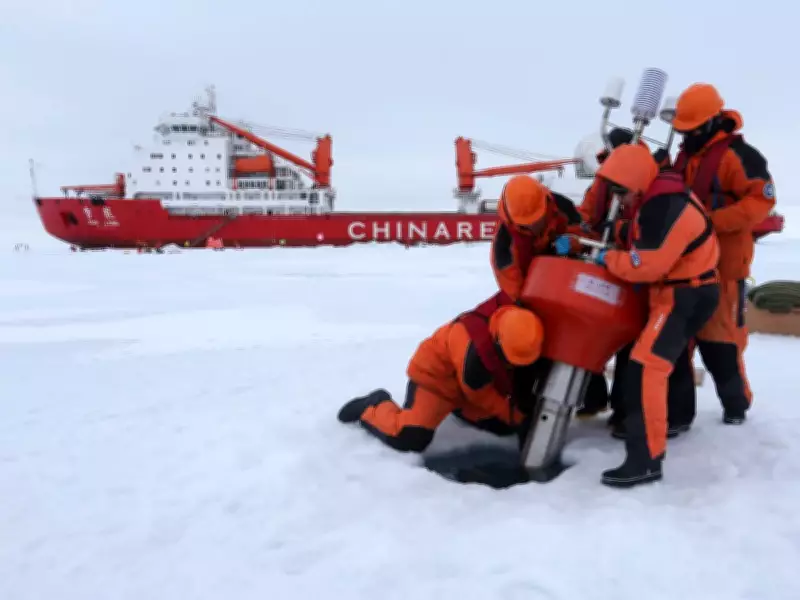
China's Arctic ambitions span decades but have accelerated dramatically in recent years alongside the country's growing economic and geopolitical influence. The journey began in 1993 when Beijing purchased its first icebreaker, the Xue Long (Snow Dragon), from Ukraine before developing its own indigenous fleet. In 2004, China established its first permanent Arctic research station in Norway's Svalbard archipelago, followed by another in Iceland in 2018.
The same year marked a pivotal moment with Beijing's formal Arctic policy announcement, which explicitly outlined plans for developing Arctic shipping routes as part of a broader Polar Silk Road initiative. The policy emphasized China's research activities and "hydrographic surveys" in the region, stating these efforts aimed to improve "security and logistical capacities in the Arctic."
Geopolitical Tensions and Military Implications
China's icebreaker construction program has heightened concerns among Western policymakers and experts, particularly as former U.S. President Donald Trump attempted to claim control of Greenland, citing Chinese and Russian advances in the region as justification. The Arctic offers numerous possibilities for military operations, ranging from space and satellite warfare to strategic positioning of nuclear-armed submarines, increasing the risk that tensions could escalate into direct confrontation.
The shipyard responsible for building China's first indigenous icebreaker also delivered the Fujian, China's third aircraft carrier, which entered service late last year featuring some of the country's most advanced military technologies. This facility operates under the state-owned China State Shipbuilding Corp., further highlighting the interconnected nature of China's civilian and military maritime ambitions.
Resource Competition and Strategic Positioning
As polar ice caps continue to melt, opening faster and cheaper shipping lanes, Western capitals anticipate a scramble to secure access to the Arctic's rich natural resources. China's activities have deepened concerns among experts who foresee increasing competition for control over this emerging territory. The Arctic represents not just economic opportunity but strategic positioning in what many view as a new frontier of great power competition.
China's comprehensive approach to the Arctic—combining scientific research, infrastructure development, and strategic partnerships—positions the country as a significant player in shaping the region's future. With its growing fleet of icebreakers and expanding network of research stations, Beijing continues to advance its Polar Silk Road vision despite mounting international scrutiny and geopolitical tensions.