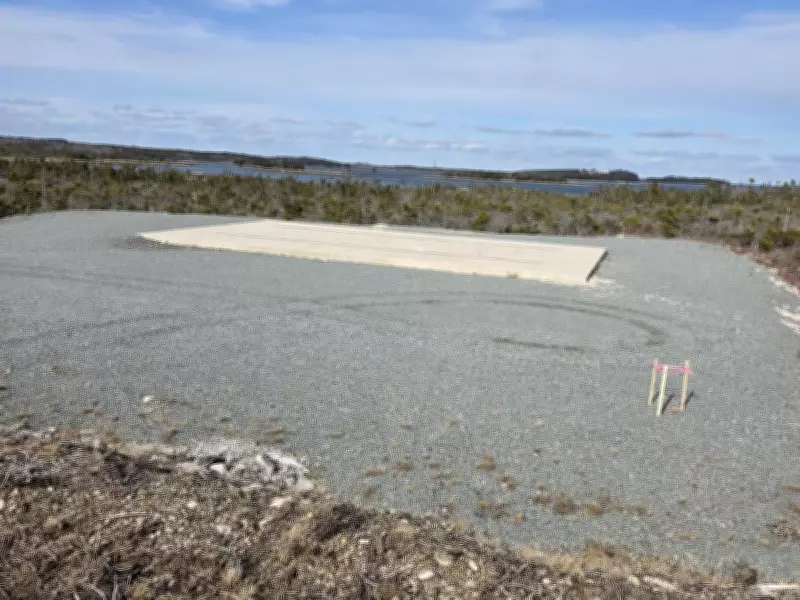
Canada's push to build the country's first commercial spaceport in rural Nova Scotia is moving from ambition to execution, backed by hundreds of millions in federal funding and infrastructure investment. However, it faces criticism that early stage construction appears limited to a concrete slab and access roads.
What is Spaceport Nova Scotia?
Spaceport Nova Scotia, under development just outside Canso, will give Canada domestic orbital launch capability and support regional economic development while entering a global launch industry increasingly dominated by private companies. Canada currently relies on foreign launch sites in the United States and Europe to send satellites into orbit for communications, earth observation, navigation and defence purposes.
The project is being developed with shared infrastructure for multiple rocket operators rather than a single integrated launch system. The company originally planned the project around Ukraine's Cyclone-4M rocket, but Russia's 2022 invasion disrupted the program and accelerated a shift toward a more flexible, multi-customer launch model.

The project sits on a 335-acre coastal site leased from the Nova Scotia government under a 40-year agreement and is intended to support both commercial and government missions. Its permit allows up to eight launches a year, with plans to scale toward 50 annually.
What's being built on site?
In its early phase, the spaceport remains largely focused on foundational infrastructure. Planned facilities include a building for assembling rockets, payload processing clean rooms for satellites, a launch control centre for mission operations and fuel storage systems.
Stephen Matier, founder and chief executive of Maritime Launch Services Inc. (MLS), said road expansion is continuing, fibre infrastructure is being extended to the site and utility planning is underway with Nova Scotia Power Inc. He said design work on major facilities is advancing, with tenders for the utility hub expected in the coming weeks, and construction is scheduled to be completed by the end of 2027.
Despite criticism that the site appears to be just a $200-million slab of concrete, the company said construction remains on track. Matier dismissed the criticism, calling it a clueless meme from people with no understanding of what's required. He estimated remaining construction costs at roughly $60 million to $70 million, but the project remains fully funded with about 30 people currently employed on site. Once fully operational, the facility is expected to support up to 80 permanent staff.