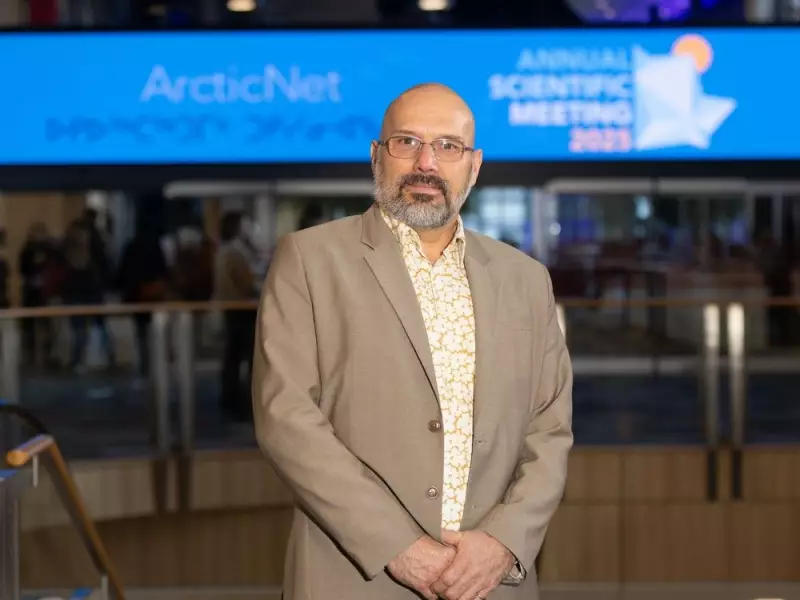
Calgary has become the epicenter of Arctic research this week, hosting the largest interdisciplinary scientific gathering on northern issues in North America. The 25th Annual Scientific Meeting, organized by ArcticNet, is unfolding at the Telus Convention Centre from Monday, December 15, through Thursday, December 18, 2025.
A Gathering of Minds for the North
The four-day summit brings together over 1,400 participants, including leading scientists, policy-makers, researchers, and Northern and Indigenous knowledge-holders. The event serves as a critical hub for collaboration, knowledge exchange, and the presentation of cutting-edge scientific findings concerning the Canadian Arctic and beyond.
ArcticNet CEO Dr. Pierre Bilodeau emphasized the meeting's scale and significance. "This is the largest interdisciplinary Arctic research conference in Canada, and potentially North America," he stated. The discussions span an exceptionally broad range of topics, from economy and industry to health, environment, ecosystems, and infrastructure.

Why Calgary? A Modern Gathering Place
This year marks the first time Calgary has hosted the prestigious meeting. Dr. Bilodeau noted the city's symbolic and practical relevance. "From a First Nations perspective, Calgary is a gathering place, so I think it’s very appropriate," he explained. "It is a place of tradition, a place of trade. We’re having those different exchanges of knowledge and information."
The choice of location was also data-driven. Bilodeau revealed that 17 to 18 percent of ArcticNet's 26-28 funded projects from the past year are based in Alberta, with significant research activities in both Calgary and Edmonton.
Spotlight on Alberta-Led Arctic Research
The conference highlights several groundbreaking projects originating from Alberta's academic institutions, showcasing the province's direct contribution to understanding the Far North.
At the University of Calgary, PhD student Gina Nickoloff is leading a project that investigates the ocean's capacity to absorb atmospheric carbon dioxide. Her work maps the distribution of inorganic carbon and tracks ocean acidification along the coast of Nunatsiavut (Labrador) and nearby regions.
Meanwhile, at the University of Alberta, Dr. David Olefeldt is conducting vital research on how wildfires and permafrost thaw in northern peatlands impact downstream aquatic ecosystems in the Taiga Plains. The ecological insights from this work are crucial for predicting and managing environmental changes.
Both of these projects have been selected for special recognition, with their themes featured as artwork on postcards distributed to attendees at the event.
Shaping the Future of Arctic Science
Beyond sharing current research, the meeting aims to chart a course for the future. Dr. Bilodeau expressed hope that the conversations will help identify key priorities and gaps in Arctic science. This strategic outlook is particularly timely as it will inform discussions related to Canada's 2025 federal budget and the nation's foreign policy concerning the Arctic region.
The ArcticNet meeting in Calgary stands as a testament to the interconnectedness of global climate systems and the essential role of Canadian science in addressing some of the planet's most pressing environmental challenges.