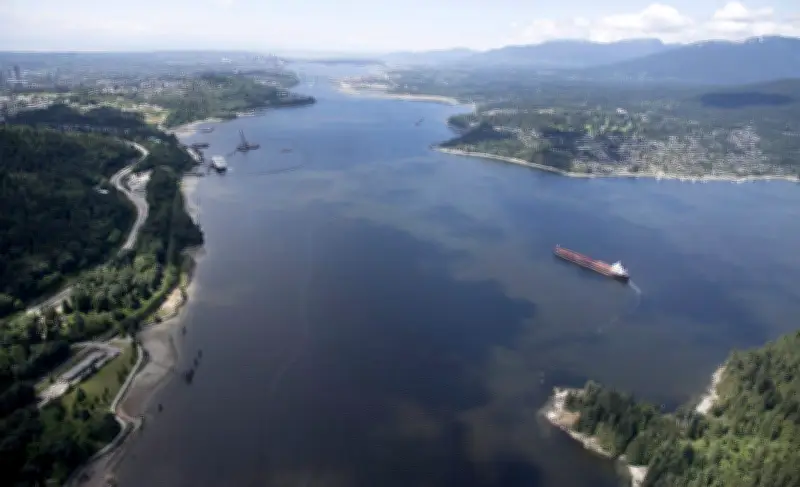
The dredging of Vancouver’s Burrard Inlet has received approval, clearing the way for larger oil tankers to navigate the waterway. The decision, announced on June 24, 2026, by federal regulators, aims to accommodate increased maritime traffic linked to the expansion of the Trans Mountain pipeline.
Project Details and Scope
The approved plan involves deepening sections of the inlet to allow tankers with a capacity of up to 250,000 deadweight tonnes to transit safely. According to Transport Canada, the dredging will remove approximately 1.5 million cubic meters of sediment from the seabed. The project is expected to take 18 months to complete, with work beginning in early 2027.
“This is a critical step in ensuring that Canadian oil can reach global markets efficiently,” said a spokesperson for the Canada Energy Regulator. The dredging is part of broader infrastructure upgrades supporting the Trans Mountain pipeline expansion, which triples the flow of crude oil from Alberta to the Pacific coast.

Environmental and Community Concerns
Environmental groups have strongly opposed the project, warning of potential harm to marine ecosystems. The Burrard Inlet is home to salmon, orcas, and other wildlife. “Dredging will stir up toxic sediments and disrupt habitats,” said Sarah Thompson of the Pacific Environmental Law Centre. “This approval ignores the long-term health of the inlet.”
Local First Nations, including the Tsleil-Waututh Nation, have also voiced opposition. “Our rights and title have been disregarded,” stated Chief Leah George-Wilson. “The inlet is a sacred part of our territory, and this project threatens its future.”
Economic and Trade Implications
Proponents argue the dredging is essential for economic growth. The Vancouver Fraser Port Authority estimates that larger tankers will increase export capacity by 30%, boosting Canada’s trade balance. “This investment positions Vancouver as a key hub for global energy trade,” said port CEO Robin Silvester.
The project is expected to create 400 direct jobs during construction and support long-term employment in the shipping sector. However, critics question the economic viability given global shifts toward renewable energy. “We’re locking in fossil fuel infrastructure for decades,” noted climate policy analyst Dr. Mark Jaccard.
Regulatory and Legal Challenges
The approval follows a three-year environmental assessment that concluded the project would have “significant but mitigable” impacts. Conditions include real-time monitoring of water quality and a $50 million fund for habitat restoration. Legal challenges are anticipated, with several environmental groups vowing to seek judicial review.
“We will fight this in court,” said Thompson. “The science is clear that this project will cause irreversible damage.” The federal government has defended the process, stating it meets all legal requirements under the Canadian Environmental Assessment Act.