Alberta's Unseasonal Thaw: Wildlife and Landscapes in a Snowless February
An incredible warm streak has transformed southern Alberta's winter landscape into something resembling early spring. From elevated vantage points, the snow has nearly vanished, leaving only scattered patches on Gladys Ridge and distant mountains. The dark silhouettes of the Porcupine Hills appear bare against the horizon, while flatlands to the south show no trace of winter's typical blanket.
Vanishing Snow and Emerging Signs of Spring
The day felt remarkably spring-like with overcast skies and unusual warmth. Despite chinook clouds spreading overhead, there was no wind, creating a stillness that allowed the scent of damp soil to rise from surrounding fields. Observers might half-expect to hear robins singing, though traditional winter patterns have been disrupted.
Along the Little Bow River, conditions appeared slightly more wintry with mostly frozen water, though breaks in the ice revealed the thaw's progress. Meltwater pooled on the surface, and the ice developed a leathery texture indicating imminent breakup. Shady banks retained some snow where sunlight couldn't penetrate, but fields remained completely bare.

Wildlife Adapting to Changing Conditions
Mule deer bucks lounged near the river, their antlers appearing worn, dry, and chalky—likely to shed soon. Their peaceful rest was interrupted only by a bounding whitetail doe passing through. Below Twin Valley Dam, the Little Bow River flowed openly, attracting hundreds of mallards and other ducks while geese flew overhead in characteristic formations.
A flock of horned larks took flight from the road, settling in nearby fields with one pausing long enough on a fencepost for photographic documentation. As dust trailed behind vehicles traveling toward Clear Lake east of Stavely, the landscape glowed golden in soft light against bare fields.
Clear Lake's Frozen Expanse and Unexpected Activity
Clear Lake remained frozen as expected, but activity dotted its blue surface. Fishermen drilling through the ice granted permission for aerial observation, and by fortunate coincidence, observers witnessed the capture of an enormous pike—estimated as long as a human leg—before its release back into the waters.
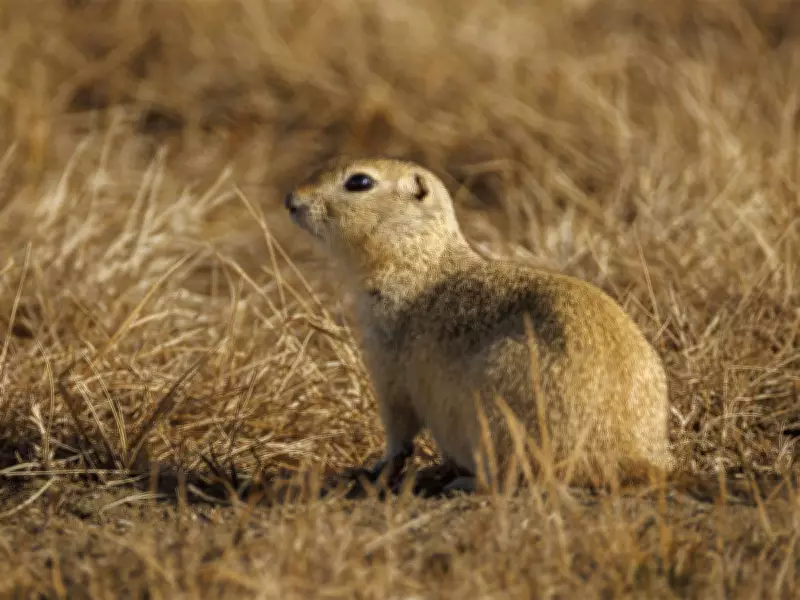
This unusual February warmth has created conditions where Richardson's ground squirrels emerge on snowless grass, wildlife exhibits behaviors typically reserved for later seasons, and landscapes appear transformed. While ice persists in some areas, the overall impression is of a season arriving months ahead of schedule, offering both concern and fascination for those documenting Alberta's changing environment.