Navigating Alberta's Treacherous Winter Roads and Atmospheric Phenomena
Driving in rural Alberta during January can present unexpected hazards, as one journalist discovered firsthand on a recent expedition. The journey began with a cautious retreat from a dangerously slick roadway, setting the stage for an exploration of both meteorological wonders and elusive wildlife.
The Perilous Start to an Eastern Alberta Expedition
The initial attempt to traverse a particular route was abruptly halted when the vehicle encountered sheer ice just beyond the first curve. After sliding approximately two car lengths before coming to a complete stop, the driver wisely reversed course. Finding traction in snow and dry grass at the roadside proved essential for safe navigation away from the hazardous conditions.
This experience served as a stark reminder of winter driving challenges in the province, where temperature fluctuations can transform seemingly passable roads into skating rinks within short distances.

Understanding Temperature Inversions in Prairie Landscapes
The day's forecast had predicted relatively mild conditions, with highs around 4°C in urban areas and 0°C further east. However, the reality on the ground proved more complex. As the journey progressed toward Eagle and Namaka Lakes, then into the Crowfoot Creek valley between the Wintering Hills and Bow River, visible atmospheric phenomena began to emerge.
What initially appeared as fog near Cheadle was actually a textbook temperature inversion. This occurs when warmer air from western regions rides over colder air settled closer to the ground. At the boundary where these two layers meet, moisture in the warm air condenses, creating the fog-like appearance observed throughout the day.
From elevated vantage points, particularly west of Eagle Lake and atop Hammer Hill, this atmospheric layering became strikingly visible. The thermometer told a compelling story: dropping from -1°C to -10°C within approximately one kilometer while descending into valley areas, then rising again to -2°C at higher elevations.
The Wildlife Quest Amid Challenging Conditions
The primary motivation for this winter journey was the ongoing search for snowy owls, which have proven particularly elusive this season. The expedition took the observer through diverse landscapes, from the heights overlooking Stobart Lake and Siksika Nation to areas near Gleichen, where the temperature inversion created dramatic vistas of blue mist suspended above colder valley air.
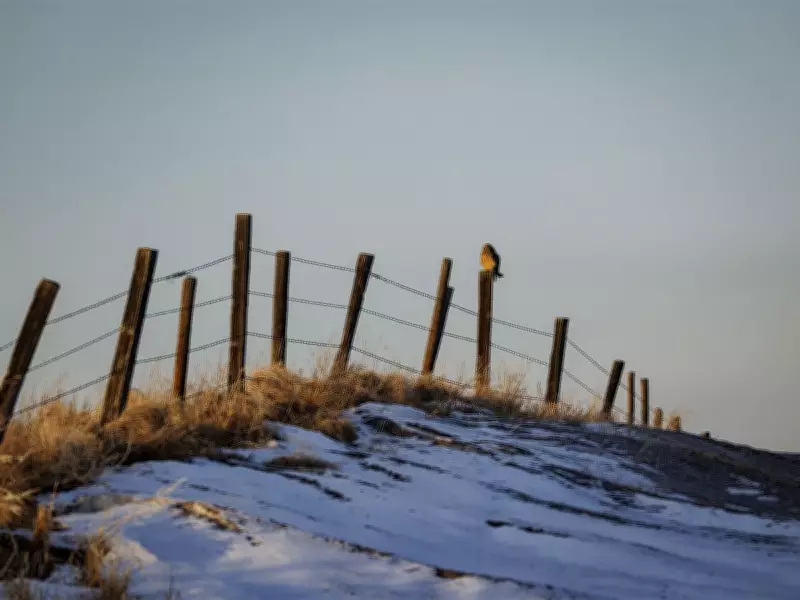
Wildlife sightings included a brief encounter with a prairie falcon near the base of Hammer Hill and, more significantly, two snowy owl observations. The first was spotted south of Standard but flew across fields before proper documentation could occur. The second remained stationary but at such distance that only its distinctive silhouette against an oil line valve was discernible.
These sightings, however brief, validated the fundamental principle of wildlife observation: persistence yields results, however modest. The expedition also captured images of a short-eared owl basking in sunlight near Crawling Valley Reservoir north of Bassano, demonstrating that winter conditions can create unique photographic opportunities despite the challenges.
Lessons from Alberta's Winter Wilderness
This journey through eastern Alberta illustrates several important aspects of winter in the province:
- Road conditions can change rapidly with elevation and temperature variations
- Temperature inversions create unique visual phenomena that are both scientifically fascinating and aesthetically striking
- Wildlife observation requires patience and adaptability to changing conditions
- Safety considerations must precede photographic or observational goals when conditions turn hazardous
The experience serves as a reminder that Alberta's winter landscapes offer both challenges and rewards for those willing to venture out with appropriate caution and curiosity.