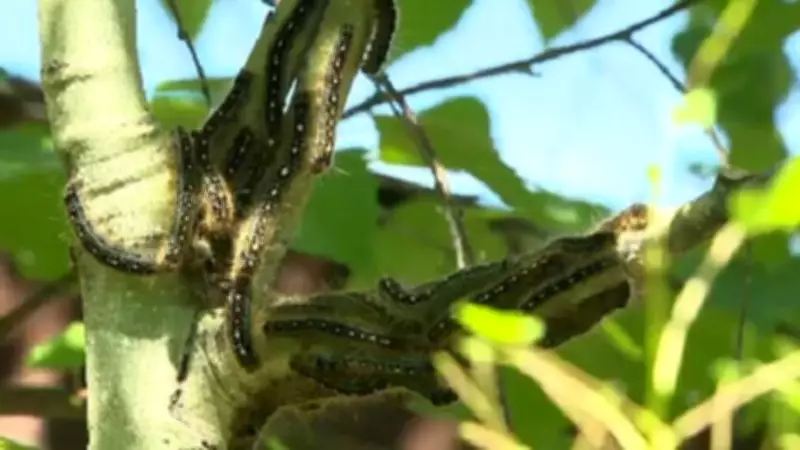
Alberta is currently witnessing a cyclical outbreak of tent caterpillars, a natural phenomenon that occurs every few years. Experts urge residents to 'just be amazed' by the sight, as the caterpillars are harmless to humans and typically last only a few weeks.
What Are Tent Caterpillars?
Tent caterpillars are the larvae of moths in the genus Malacosoma. They are known for building silk tents in the crotches of trees, where they shelter during molting and when not feeding. The caterpillars feed on leaves, primarily of deciduous trees like aspen, poplar, and birch.
Cyclical Nature
Outbreaks of tent caterpillars are cyclical, occurring every 6 to 10 years. During these periods, populations can surge dramatically, leading to widespread defoliation. However, the trees typically recover, and the caterpillars are a natural part of the ecosystem.

Impact on Trees
While a heavy infestation can strip trees of leaves, healthy trees usually regrow foliage within a few weeks. Stress from repeated defoliation can weaken trees, making them more susceptible to disease or other pests, but single outbreaks are rarely fatal.
What Residents Should Do
Experts recommend:
- Leaving the caterpillars alone, as they are a natural part of the environment.
- Removing tents by hand or with a stick if they are near high-traffic areas, but avoiding chemical pesticides.
- Monitoring trees for signs of stress and providing water during dry periods.
The outbreak is expected to subside naturally as predators and parasites increase, or as the caterpillars pupate and become moths.