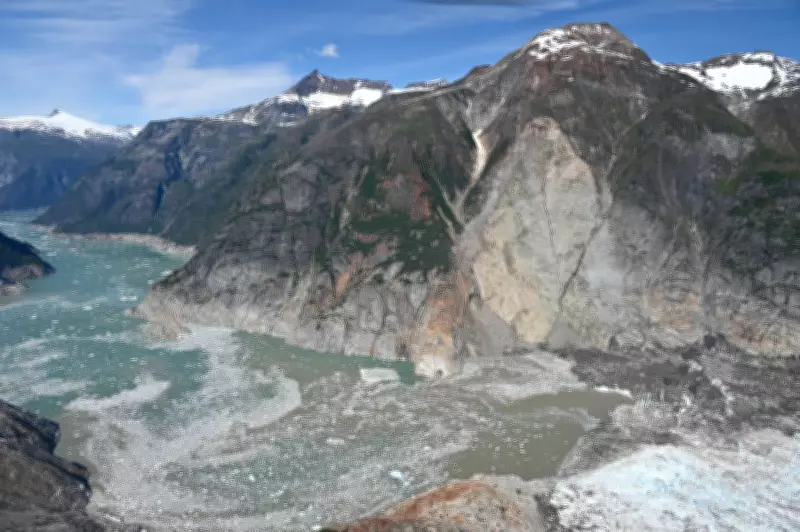
Millions of tonnes of rock cascaded into an Alaskan fiord last year, unleashing a tsunami that soared as high as the iconic CN Tower. The event, captured in an oblique aerial photo on Aug. 13, 2025, shows the landslide at the terminus of South Sawyer Glacier, south of Juneau, Alaska, and the Tracy Arm fiord. The trim line along the far side of the fiord reveals where the tsunami stripped the walls of vegetation.
Massive Landslide and Tsunami
The landslide occurred in a remote area, but its impact was monumental. The resulting tsunami reached heights comparable to Toronto's CN Tower, which stands at 553 meters. Scientists warn that such events could pose risks to coastal communities, particularly in British Columbia, where similar geological conditions exist.
Implications for British Columbia
Experts emphasize that this event serves as a stark reminder for B.C., which has numerous fiords and steep terrain prone to landslides. Climate change, with melting glaciers and permafrost, may increase the frequency of such landslides. Monitoring and early warning systems are crucial for mitigating future risks.

Scientific Observations
The U.S. Geological Survey documented the landslide and tsunami, noting that the trim line—a clear demarcation of vegetation removal—indicates the wave's height. This data helps researchers model potential tsunami impacts in other regions.
Broader Context
This event is part of a pattern of increasing landslide activity in Alaska due to warming temperatures. Similar incidents have been recorded in recent years, underscoring the need for continued research and preparedness.