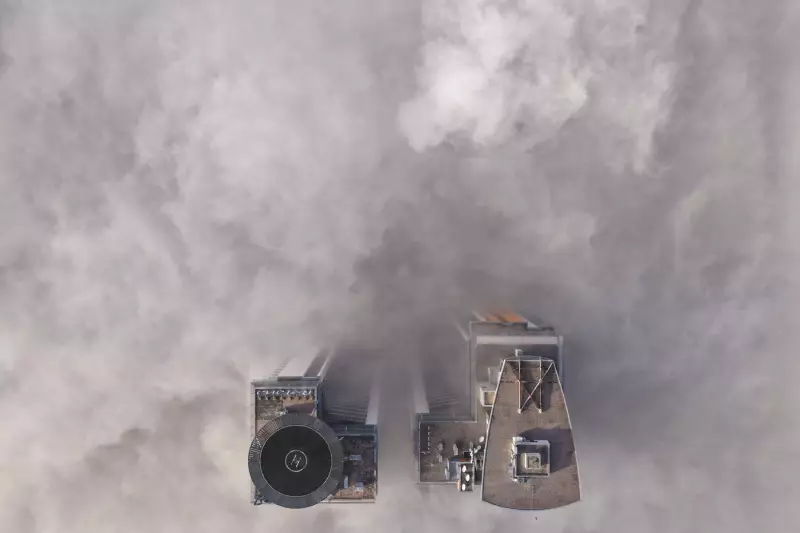
A thick and heavily polluted fog descended upon the Bosnian capital of Sarajevo on Thursday, December 18, 2025, creating a significant public health hazard. In response to the dangerously poor air quality, local authorities issued directives for schools to keep children inside for their safety.
City Shrouded in Hazardous Haze
The event was captured in stark aerial photographs by The Associated Press, showing the city's buildings barely visible, peaking through a dense, greyish layer of fog. The images, credited to photographer Armin Durgut, illustrate the severity of the smog-like conditions that enveloped the city. This type of wintertime pollution is a recurring issue in the region, often caused by a combination of weather inversions trapping cold air and pollutants from widespread use of coal and wood for heating, along with vehicle emissions.
Immediate Public Health Response
The primary and most immediate action taken was the order for schools to restrict outdoor activities and keep students indoors. This is a standard protective measure during severe air pollution episodes, designed to shield vulnerable populations, particularly children, from the harmful effects of inhaling fine particulate matter and other toxins. Prolonged exposure to such polluted air can exacerbate respiratory conditions like asthma and lead to other cardiovascular and health problems.

Broader Context and Recurring Challenges
While this specific incident occurred in Bosnia, it highlights a global environmental and public health challenge, particularly in urban basins and during winter months. Cities worldwide, including many in Canada, can face similar issues with air quality advisories due to forest fire smoke or winter smog. The event in Sarajevo underscores the critical link between environmental policy, energy sources, and direct human health outcomes. Effective long-term solutions require a sustained focus on transitioning to cleaner energy and improving emissions standards to prevent such hazardous episodes.
The directive on December 18 served as a necessary short-term safeguard, putting the well-being of the city's youngest residents first during an acute environmental crisis.