Vertigo Theatre's 'A Killing Snow' Presents a Tangled Mystery in a Remote Farmhouse
Vertigo Theatre's latest offering, A Killing Snow, delivers a promising setup that immediately captures the audience's attention. Written by Paul Ciufo, this production traps five characters in a remote farmhouse during a blinding snowstorm, drawing clear inspiration from Agatha Christie's classic mysteries like The Mousetrap and And Then There Were None. The isolation and mounting tension create a perfect backdrop for a complex puzzle that keeps viewers guessing until the very end.
A Blend of Genres Creates an Intriguing Yet Overstuffed Narrative
The play cleverly incorporates a twist with the off-stage death of an elderly woman, whose body is left in the mudroom out of respect by Gerald, the house's owner. This setup hints at inevitable disappearance, adding a layer of suspense. However, A Killing Snow struggles to define its identity, oscillating between a whodunnit, a ghost story, a thriller, and a psychological drama. This genre-blending approach, while ambitious, sometimes feels overcrowded, as if trying to include every element except the proverbial kitchen sink.
Intertwined Histories and Motives Unfold Among the Trapped Quintet
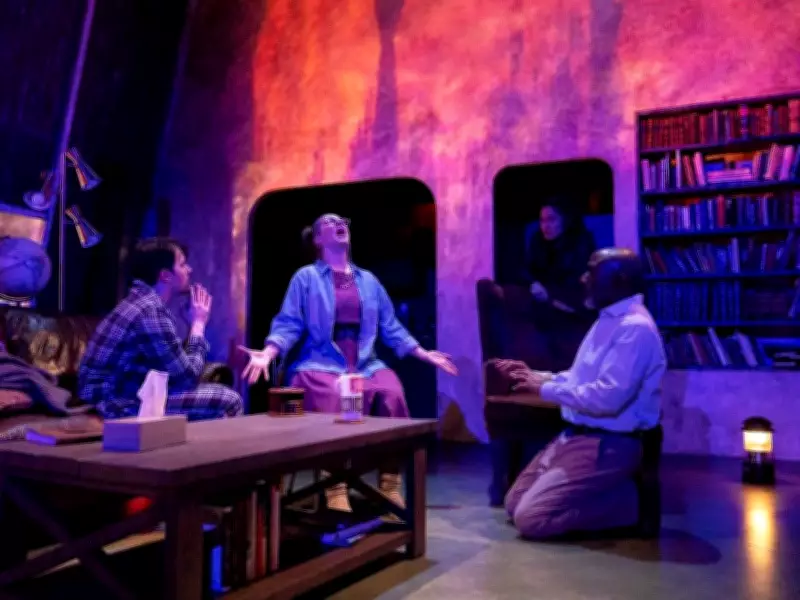
The five characters trapped in the house share deeply interconnected pasts that fuel the mystery. Gerald, portrayed by Andrew Moodie, is a high school teacher who dated both Libby and Alena and had unfulfilled ambitions, ending up back in Clinton teaching Latin to disinterested students like Jack. Jack, played by Bernardo Pacheco with humorous flair, is now a pig farmer—or as he prefers, a swine herdsman—who once dated Libby's daughter until she intervened. Alena was involved in environmental disputes with local farmers, while Callie's abusive father, whom Gerald taught, committed suicide. These skeletons provide ample motives for murder as they resurface throughout the play.

Supernatural Elements and Atmospheric Design Enhance the Eerie Mood
Supernatural touches abound, with Libby's psychic premonitions of dark events and eerie appearances by murdered characters, amplified by Andy Moro's masterful lighting design that creates chilling moments. Latin messages warning of impending doom appear on a whiteboard, adding an intellectual layer to the suspense. The snowstorm, while a central obstacle, is somewhat undermined when characters venture outside, suggesting it may not be as formidable as initially portrayed.
Realistic Staging and Performances That Could Use More Eccentricity
Director Tara Beagan opts for a realistic staging, treating the mayhem as a kitchen-sink melodrama. This approach grounds the production but might benefit from more eccentricity, as evidenced by the audience's positive reaction to Bernardo Pacheco's funny yet not silly portrayal of Jack. Katherine Fadum's performance as Libby could have been more engaging with a touch of outrageousness, potentially elevating the play's energy and entertainment value.
In summary, A Killing Snow is a complicated puzzle that offers a gripping premise and clever twists but occasionally feels overstuffed with genres and plot elements. With strong performances and atmospheric design, it remains an intriguing addition to Vertigo Theatre's repertoire, challenging audiences to piece together its many layers.