Country Joe McDonald, Woodstock Anti-War Icon, Dies at 84
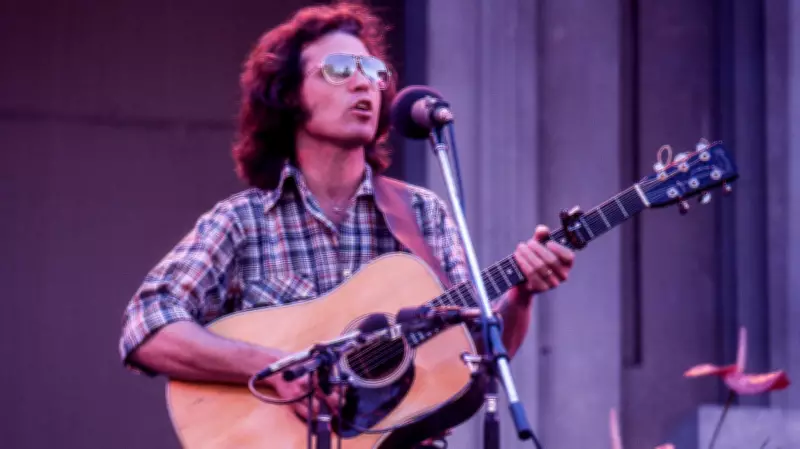
Country Joe McDonald, the influential 1960s rock musician whose defiant anti-Vietnam War anthem "I-Feel-Like-I'm-Fixin'-To-Die Rag" became a defining protest song and a memorable highlight of the Woodstock festival, died Sunday at age 84. The Berkeley, California-based artist passed away from complications related to Parkinson's disease, according to a statement from his wife of 43 years, Kathy McDonald, issued through his publicist.
A Musical Force in the Bay Area Scene
McDonald was a longstanding fixture in the vibrant Bay Area music community, where he collaborated and performed alongside legendary acts including the Grateful Dead, Jefferson Airplane, and his former girlfriend Janis Joplin. Throughout his prolific career, he wrote or co-wrote hundreds of songs spanning psychedelic jams to soul-infused rock tracks, releasing dozens of albums that showcased his versatile artistry. However, his most enduring legacy remains the talking blues protest song he composed in under an hour during 1965—the same year President Lyndon Johnson escalated U.S. ground forces in Vietnam—and recorded at the Berkeley residence of Arhoolie Records founder Chris Strachwitz.
"I-Feel-Like-I'm-Fixin'-To-Die Rag" adopted the deadpan delivery style of McDonald's idol, Woody Guthrie, offering a satirical celebration of war and premature death. Its unforgettable chorus, memorized by concertgoers and activists alike, declared: "And its 1, 2, 3 what are we fighting for? Don't ask me I don't give a damn, Next stop is Vietnam, And its 5, 6, 7 open up the pearly gates, Well there ain't no time to wonder why, WHOOPEE we're all gonna die."

The Woodstock Moment and Lasting Impact
When McDonald initially wrote the song, he was co-leading the newly formed band Country Joe and the Fish, incorporating a distinctive "F-I-S-H" chant before performances. By the time the group took the stage at Woodstock in 1969, with the band nearing dissolution, the chant had evolved into a different four-letter word beginning with "F," and McDonald performed before hundreds of thousands of attendees. The powerful moment, captured in the subsequent Woodstock documentary, featured many in the audience standing and singing along, with lyrics subtitled on screen.
In a 2019 interview with The Associated Press, McDonald reflected, "Some people alluded to peace and stuff (at Woodstock), but I was talking about Vietnam." He described the opening chant as "an expression of our anger and frustration over the Vietnam War, which was killing us, literally killing us."
Controversy and Legal Challenges
While the song propelled McDonald to fame, it also brought significant professional and legal repercussions. In 1968, Ed Sullivan canceled a scheduled appearance by Country Joe and the Fish on his variety show upon learning of the provocative opening cheer. Shortly after Woodstock, McDonald faced arrest and fines for using the cheer during a performance in Worcester, Massachusetts, an incident that contributed to the band's eventual breakup.
McDonald's activism extended to the courtroom, where he even performed the song during testimony. His associations with political radicals like Abbie Hoffman and Jerry Rubin led to his summons as a witness in the "Chicago Eight (or Seven)" trial against organizers of anti-war protests at the 1968 Democratic National Convention. When he began singing on the stand, the judge promptly interrupted, stating, "No singing is permitted in the courtroom," prompting McDonald to recite the lyrics instead.
In 2001, McDonald faced a lawsuit from the daughter of late jazz musician Edward "Kid" Ory, who alleged the melody of "I-Feel-Like-I'm-Fixin'-To-Die Rag" closely resembled Ory's 1920s instrumental "Muskrat Blues." A U.S. district judge in California ruled in McDonald's favor, citing the unreasonable delay between the song's release and the filing of the suit.

A Lifelong Connection to the 1960s
McDonald continued touring and recording for decades after Woodstock, yet he remained inextricably linked to the late 1960s counterculture, a period he nostalgically referenced in his late 1970s rocker "Bring Back the Sixties, Man." His discography included albums such as "Country," "Carry On," "Time Flies By," and "50," and he persisted in writing protest songs, notably the 1982 release "Save the Whales."
Despite his anti-war stance, McDonald acknowledged complex feelings about Vietnam, having served in the Navy in Japan during the late 1950s. He identified with both protesters and military personnel, and in the 1990s, he helped organize the construction of a Vietnam Veterans Memorial in Berkeley, unveiled in 1995. McDonald later wrote of the ceremony, "Many remembered the ugly confrontations that had happened during the war years in the city. Yet the atmosphere proved to be one of reconciliation, not confrontation."
Personal Life and Musical Roots
McDonald was married four times, most recently to Kathy McDonald, and is survived by five children and four grandchildren. His relationship with Janis Joplin during the latter half of the 1960s involved two young hippies whose careers and personalities ultimately diverged. When McDonald decided to end their relationship, Joplin requested he write a song, resulting in the heartfelt ballad "Janis."
Born on January 1, 1942, in Washington, D.C., and raised in El Monte, California, McDonald did not hail from the "country" as his stage name might suggest. He was the son of former Communists who named him after Josef Stalin and encouraged his musical pursuits and working-class identification. As a teenager, he began writing songs, playing trombone proficiently enough to lead his high school marching band, and teaching himself folk, country, and blues guitar.
After his Navy service, McDonald attended Los Angeles State College in the early 1960s before relocating to Berkeley, where he immersed himself in folk music and political activism. He founded the underground magazine Rag Baby, for which "I-Feel-Like-I'm-Fixin'-To-Die Rag" was originally written as promotional material, and helped establish local groups like the Instant Action Jug Band and the Berkeley String Quartet.
In 1965, he formed Country Joe and the Fish with fellow singer-guitarist Barry "The Fish" Melton, later expanding the lineup to include bassist Bruce Barthol, organist David Bennett Cohen, and drummer Gary "Chicken" Hirsh. The band's name was suggested by magazine publisher Eugene "ED" Denson, inspired by a Mao Zedong quote describing revolutionaries as "the fish who swim in the sea of the people." McDonald earned the nickname "Country Joe" after Denson learned Stalin was referred to as "Country Joe" during World War II.
Like contemporaries such as Jefferson Airplane and the Byrds, Country Joe and the Fish transitioned from folk to folk-rock to acid rock. Their debut album, "Electric Music for the Mind and Body," released in May 1967, featured the minor hit "Not So Sweet Martha Lorraine" alongside extended jams. A month later, they performed at the historic Monterey Pop Festival, the inaugural major rock gathering and a cornerstone of the celebrated Summer of Love.
Reflecting on that era in a 2018 interview with aquariandrunkard.com, McDonald remarked, "I think the 'Summer of Love' thing was manufactured by the media or something, because I don't remember us thinking, 'Wow, this is the "Summer of Love."' (But) I was just thrilled to be a part of this new counterculture and new tribe because I had never really felt comfortable in the other tribes that I was a part of growing up and in the Navy. My parents were actually Jewish Communists. I never felt a part of it, but I was really thrilled and happy to be a hippie."