When Fiction Becomes Reality: Author's Dystopian Novel Mirrors Tech-Driven World
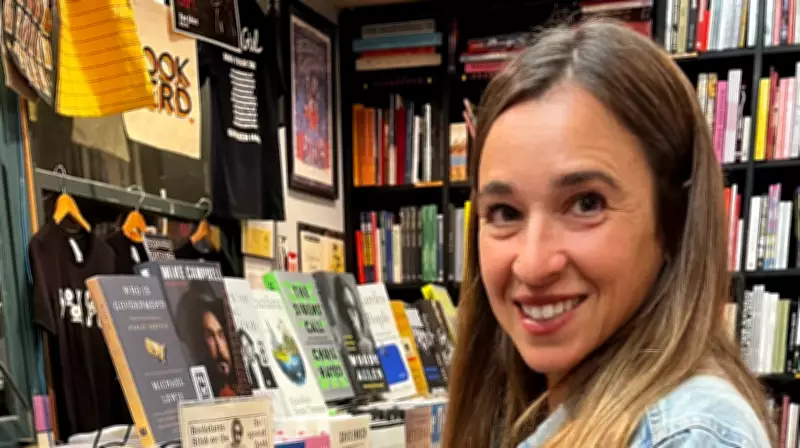
While retreating from technology on a mountain, author Liza Monroy received a text from a friend linking to a New York Times profile of influencer Braden Peters, known online as Clavicular. The message noted how the article's "futuristic weirdness" reminded them of Monroy's novel. Once reconnected to Wi-Fi, Monroy embarked on a bizarre descent into the "looksmaxxing" subculture, abruptly ending her intended tech cleanse.
The Unsettling Parallels Between Imagination and Reality
Monroy began writing The Distractions in 2012, a time when many of the technologies now proliferating were nonexistent or niche. By the book's 2025 publication—coinciding with Clavicular's rise to fame—elements she had feared were too far-fetched for readers were bleeding into reality. During her book tour, she witnessed a robot crossing a Los Angeles street, dismissed by a companion as "just DoorDash." She observed Waymo vehicles navigating San Francisco and encountered "servergrippers," her fictional term for automated baristas, serving espresso at San Francisco International Airport.
"Were these strange coincidences, or proof I'd done perhaps too much homework?" Monroy reflects. For nearly a decade, she immersed herself in research about the future, finding some parallels humorous and innocuous, like robotic coffee makers. However, other aspects of her novel's world mirroring contemporary reality terrify her.

The Creepy Convergence of Surveillance and Influence
The Times profile reveals Clavicular specializes in "IRL" streaming: going out in public to interact with strangers, creating viral moments clipped for social media. This capitalizing on being "watched" was a central, unsettling premise in The Distractions. Reading about a real person who dates to livestream for an audience, while his date watches the stream on her phone even as she stars in it, felt uncomfortably close to Monroy's fiction.
In the novel, as in life, people exist in a constant state of watching and being watched. A futuristic influencer is compensated for allowing audiences into his most mundane moments, from brushing teeth to sponsored dates. A blip in his life catalyzes the protagonist's years-long romantic obsession. Monroy's own compulsive online behavior toward someone who ghosted her inspired her initial curiosity about the future, exhausting her like an addiction she couldn't escape.
Envisioning a Screenless Future and Its Replacements
Monroy's wish for all screens to be destroyed became a creative portal. She pondered what a screenless future might look like and whether we could ever be free from distractions and obsessions. This led her to invent "eyelets": tiny drone AI assistants smarter than humans that project content—from an influencer's latest reel to a FaceTime call—in 3D on demand. In her novel, people mostly watch others they imagine lead happier lives, taking perverse pleasure in their envy.
Monroy transferred her obsessive tendencies from monitoring her "limerence object" to building the future of The Distractions. But could this creative process cure what ailed her? Two years into writing, a colleague's invitation to the 2014 Consumer Electronics Show in Las Vegas provided a goldmine of inspiration.
Researching the Future at CES and Beyond
At CES, Monroy admired wearable tech, driverless vehicles, drones, and household-optimization robots. She incorporated hyperreal versions into her novel: smart fridges that order replenishments, home robots tending to every whim, mirrors speaking affirmations while reporting news and social media stats. Later, teaching a class at UC Santa Cruz's Writing Program with a syllabus focused on technology and the future became a research lab for the book.
Futurist Ray Kurzweil's 2005 book The Singularity Is Near proved particularly predictive, positing a 2040s period where technological change transforms human life irreversibly, blurring lines between human and machine. Alex Mar's Wired profile of roboticist Hiroshi Ishiguro inspired Monroy to give everyone in her novel a "ReelPal" robotic friend.

When Parody Becomes Reality: Aesthetic Extremes and Language
Plastic surgery and future aesthetics were central to Monroy's world-building, since constant surveillance demanded looking good. She imagined exaggerated features like pointy "chinfiles" and saucer-shaped cheek implants, thinking them ridiculously far-fetched. Yet for influencers like Clavicular, pursuits like bonesmashing and chin extensions are real, making her parody uncomfortably close to contemporary life.
Even the language in the Times profile could have been lifted from her novel. Clavicular's slang, compared to Chaucer's Middle English or the dialect in A Clockwork Orange, includes terms like "mog" (from "alpha male of the group"). Monroy fears we may soon all use phrases like "second-floor-maxxing" for going upstairs or "Temporary Intimacy Companions" for hookups—a term she coined in her book.
The Depressing Realization and a Call for Mindfulness
Seeing these contrivances manifested is, for Monroy, the most depressing way speculative fiction has become reality. It can make one want to renounce technology altogether—a theme in her novel where "offReelers" forsake tech for offline existence. Her protagonist flees an offReeler meeting back to her drone companion, mirroring how many feel when away from phones too long.
Monroy believes we need to experience discomfort: getting lost without GPS, having questions ChatGPT can't answer, sitting with uncertainty. Despite technology's conveniences, it numbs our humanity, leading to epidemic levels of anxiety and loneliness from forgotten interpersonal interactions.
Finding Balance and Hope in a Dystopian Landscape
Writing The Distractions turned Monroy into a bit of an offReeler herself, though she stopped short of deleting social media—ironically needed to promote her anti-social media novel. She advocates for mindfulness in tech interactions, taking useful parts and avoiding damaging ones. Now, she engages in screen-free activities like surfing in wave pools.
Monroy acknowledges corporations, governments, and media have immense influence, and the genie is often out of the bottle. However, she urges pushing back when possible and avoiding promoting figures like Clavicular who add little good to the conversation. Despite dystopian trends, she hopes technology can be used for good, noting desirable elements in her novel: no gender norms, universal basic income, and healthcare.
She reminds herself that all new technology—from railroads to canned food—faced initial skepticism. Keeping perspective is key: while you might not want Clavicular influencing your child, AI curing cancer or solving climate change isn't bad. The way forward requires nuance, thought, care, and above all, humanity. Monroy never expected her fictional dreams to stare back at her so soon from reality. Instead of fighting the future, she urges using what we learn and dream to make it—and ourselves—better.