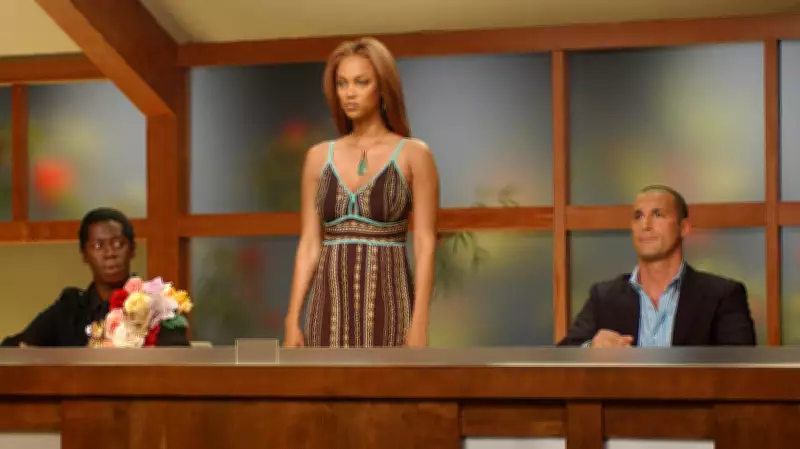
Netflix Docuseries Reexamines America's Next Top Model's Troubled Legacy
The moment Tyra Banks appears as a talking head in the trailer for "Reality Check: Inside America's Next Top Model," it becomes clear this Netflix docuseries won't deliver the comprehensive reckoning fans have anticipated for years. Directed by Mor Loushy and Daniel Sivan, this three-part documentary promises an unprecedented behind-the-scenes look at the iconic modeling competition that dominated television for over two decades.
A Show's Evolution from Authenticity to Spectacle
When America's Next Top Model premiered more than twenty years ago, its mission appeared straightforward: reveal the genuine realities of the modeling industry through an unflinching lens. Banks, drawing from her own experiences, aimed to showcase both the triumphs and struggles aspiring models face. This raw authenticity initially resonated with audiences, transforming the show into an instant cultural phenomenon that would span twenty-four cycles.
However, as ratings soared, the program's original intent gradually faded beneath increasingly sensationalized content. Challenges became more gimmicky, including the infamous race-swapping photoshoot that sparked widespread criticism. Many viewers, particularly younger audiences during the show's original run, failed to grasp the problematic nuances being normalized as entertainment.

Confronting Controversial Moments
The docuseries dedicates substantial time to reexamining the show's most troubling episodes, from body shaming and sexual misconduct incidents to extreme makeovers that sometimes involved actual cosmetic procedures. Cringeworthy photoshoot concepts that haven't aged well receive renewed scrutiny, presented unflinchingly for contemporary audiences.
One particularly disturbing revelation involves Cycle 2 contestant Shandi Sullivan, who describes what she characterizes as a sexual assault during the show's Milan trip. Sullivan recalls being intoxicated and blacked out when the incident occurred, with cameras capturing everything while no intervention took place. "All I remember is him on top of me. I was blacked out," she emotionally recounts. "No one did anything to stop it. And it all got filmed, all of it."
When questioned about Sullivan's experience, Banks deflects responsibility, stating production matters fall outside her territory. Executive producer Ken Mok defends the filming approach, explaining contestants were warned cameras would document everything, though he acknowledges significant edits were made before Sullivan's footage aired. Former judge Jay Manuel reveals production decided to treat Sullivan's incident as a "storypoint" to follow through, while Mok describes it as "one of the most memorable moments in 'Top Model.'"
Contestants Share Lasting Trauma
Sullivan isn't alone in voicing grievances. Cycle 1 alum Ebony Haith discusses feeling discriminated against as one of few Black women during her season and being blindsided when the show publicly revealed her sexuality. Fellow contestant Giselle Samson reveals she still struggles with body dysmorphia stemming from judges' harsh critiques.
Cycle 6 winner Danielle "Dani" Evans details being pressured to close the gap in her teeth to remain in the competition, only to discover a later season contestant received a gap as part of her makeover. Banks acknowledges apologizing to Evans for this incident, explaining she was influenced by agents who claimed Evans wouldn't work professionally with her natural teeth. "Hindsight is 20/20 for all of us," Banks offers in defense. "It just so happens that a lot of the things that are 20/20 for me happened in front of the world."
Missed Opportunities for Accountability
Throughout the documentary, Banks delivers what often feel like empty statements regarding the show's wrongdoings. Despite having acknowledged past mistakes previously, she fails to use this platform to genuinely confront the real impact of her series' decisions. Particularly disappointing is her refusal to address the fallout with former friend and judge Jay Manuel, who was publicly ousted alongside fellow judges Nigel Barker and J. Alexander.

"I should call Jay. I don't wanna do this here," she tells producers with a tight-lipped smile, avoiding meaningful discussion about their severed relationship.
The docuseries relies heavily on aggrieved contestants to highlight controversies rather than holding those responsible fully accountable. Instead of focusing deeply on where the show went fundamentally wrong, the documentary often veers toward nostalgic reminiscence, potentially missing opportunities for substantive critique.
A Complicated Legacy and Uncertain Future
This retrospective examination of America's Next Top Model's complicated legacy arrives as Banks hints at a potential revival. "I feel like my work is not done. You have no idea what we have planned for Cycle 25," she cryptically reveals at the documentary's conclusion.
If the production team believes the lesson learned is simply to deliver more of the same entertainment formula, especially after years of exposed controversies and participant trauma, they may have fundamentally misunderstood the critiques leveled against the original series. The docuseries ultimately raises more questions than it answers about accountability, responsibility, and whether problematic reality television formats deserve revival or retirement.
Reality Check: Inside America's Next Top Model is currently streaming on Netflix, offering viewers a chance to reconsider one of reality television's most influential yet problematic franchises through a contemporary lens.