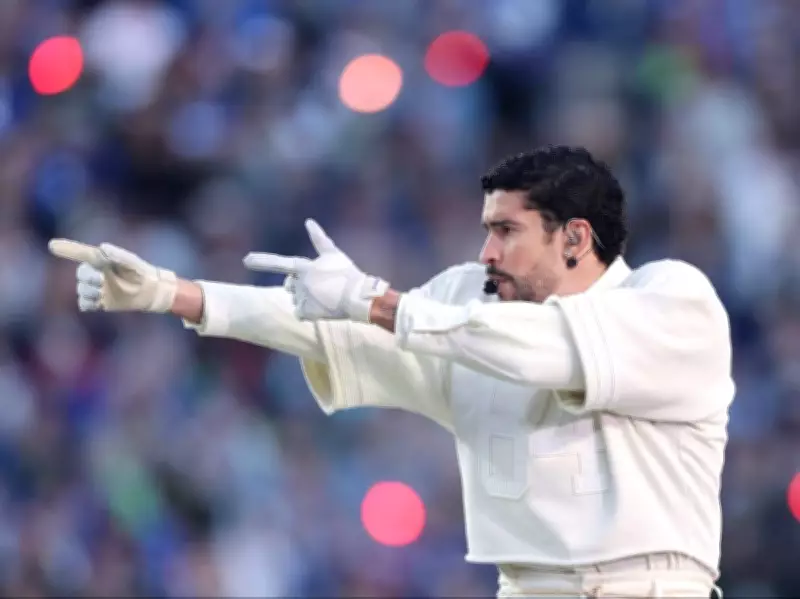
In a scathing critique, Victor Davis Hanson has labeled the 2026 Super Bowl halftime show as a predictable and boring spectacle, drawing parallels to ancient Roman excesses. The show, headlined by Bad Bunny, took place on February 8, 2026, at Levi's Stadium in Santa Clara, California, and has sparked significant controversy for its content and execution.
A Formulaic and Uninspired Performance
According to Hanson, the halftime show followed a tired script that has become all too familiar in recent years. He describes it as featuring mediocre music overlaid with gaudy, flashily lit sets that ultimately feel empty and meaningless. The performance included supporting dancers engaging in suggestive movements and explicit gestures, synchronized with the main singer, which Hanson argues were designed to highlight sexual allusions in the lyrics.
This annual ritual, orchestrated by the NFL, is intended to appeal to American families of all ages during their festive cultural holiday. However, Hanson contends that it has grown stale and monotonous, with this year's edition exacerbating the tedium of one of the most lackluster Super Bowl games in history.

Language and Cultural Controversies
A key point of contention was the decision to have Bad Bunny perform entirely in Spanish. Hanson notes that while 14% of the U.S. population is fluent in Spanish, 90% is proficient in English, suggesting this choice was aimed at expanding the NFL's global audience or shocking America into accepting a multilingual identity. Of the anticipated 60 million American viewers, over 50 million likely could not comprehend Spanish, having been previously urged by Bunny to learn the language before the game.
Hanson finds it ironic that America provides translations in courts, hospitals, and schools for non-English speakers, yet the marquee event of its signature sport did not offer translations for the majority of the population. He questions whether performing in Spanish was truly avant-garde, arguing that a bolder move would have been to reconnect with disenchanted families seeking a break from scripted, raunchy spectacles.
Explicit Content and Political Undertones
The lyrics of Bad Bunny's songs, particularly "Safaera," are described as raunchy and demented, with explicit references to exploitative sexual acts and misogynistic language. Hanson wonders how woke intersectional feminists reconcile Bunny's DEI credentials with his objectification of women. He suggests that if Bunny's goal was to shock America, singing in English would have forced listeners to confront his adolescent riffs on anatomy.
Hanson also touches on political elements, noting that Bunny was instructed to keep his politicking subtle, avoiding repeats of prior criticisms of ICE. This, Hanson interprets, meant the NFL greenlit obscenities as long as they were in Spanish, not alienating viewers who oppose illegal immigration. Ricky Martin's performance included incoherent Spanish-language harangues about American actions in Hawaii, adding to the controversy.
Broader Implications and Historical Context
Hanson references a writer from the now-defunct Washington Post sports section who boasted that Colin Kaepernick would be the most relevant figure at the 2026 Super Bowl. He connects this to Kaepernick's role in popularizing kneeling during the National Anthem, which he believes reduced NFL viewership by 25% in 2016-17. In summary, Hanson concludes that the halftime show was just another iteration of the same old Super Bowl Satyricon, failing to innovate or engage a broad audience.
The critique highlights ongoing debates about entertainment, culture, and politics in major sporting events, underscoring the challenges the NFL faces in balancing global appeal with domestic sensibilities.