Black-Led Rom-Com 'You, Me & Tuscany' Carries Weight of Future Films
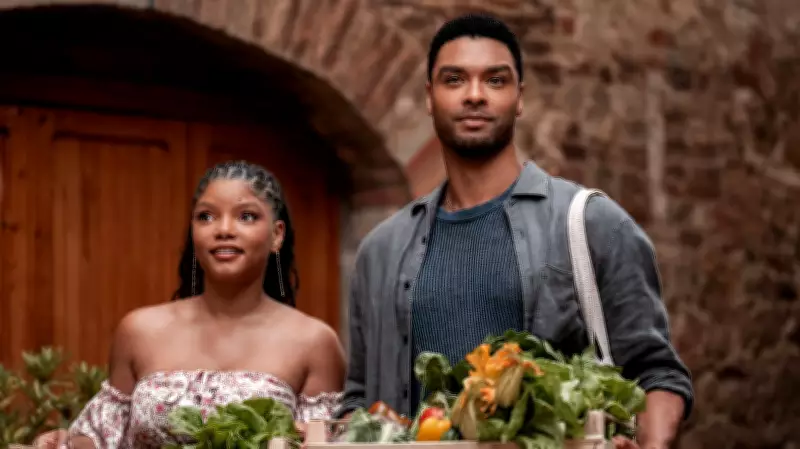
The upcoming romantic comedy "You, Me & Tuscany" starring Halle Bailey and Regé-Jean Page represents more than just a cinematic escape to Italy. According to filmmaker Nina Lee, the film's theatrical success could determine "the fate of so many Black films" in Hollywood's current landscape.
Viral Revelation Sparks Industry Conversation
Lee's candid social media posts this week revealed that multiple studios and executives have told her they won't purchase her already-shot romantic comedy or consider her romance script until they see how "You, Me & Tuscany" performs at the box office. Directed by Kat Coiro, the film follows a young woman whose impulsive decision to crash an empty Italian villa leads to an unexpected life-changing romance.
"A film that has nothing to do with me could quite literally change my life," Lee wrote in her viral thread that garnered hundreds of reshares and over half a million views within 24 hours.

Industry Double Standard Exposed
The revelation sparked outrage across social media, with many users pointing out the double standard in Hollywood decision-making. "White rom-coms can fail and they will still make new ones," one user noted, while another added, "This type of shit pisses me off so bad. White rom coms flop all the fucking time yet they'll keep doling out money to make em."
Even "You, Me & Tuscany" producer Will Packer acknowledged the pressure, stating that in Hollywood's "current IP obsessed environment," the success of this original romantic comedy with two Black leads "could change a lot of people's lives."
Historical Context and Current Challenges
The film marks the first Black-led romantic comedy to reach theaters in what feels like ages, though not for lack of effort. Lee has been working to secure distribution for her own rom-com "That's Her" starring Kountry Wayne and Coco Jones since production wrapped in late 2024.
"That was kind of the beginning of a lot of nos," Lee told HuffPost about her meetings with studios. "We want to meet the director because we still really loved [the movie]. We just don't want to buy it."
The current situation contrasts sharply with the golden era of Black romantic comedies in the 1990s and early 2000s, when films like "Boomerang," "How Stella Got Her Groove Back," and "Brown Sugar" regularly hit theaters. Even in the 2010s, films like "Think Like a Man" and "About Last Night" kept the genre alive.
Broader Industry Issues
Lee emphasized that the challenges extend beyond Black filmmakers alone. She highlighted statistics from the 2025 ReFrame Report showing only 11 of the year's top 100 films were directed by women. "It's not just a Black issue," Lee said. "My white female director friends are going through it."
The intersectionality compounds the difficulty. "It's hard for women in general," Lee explained. "But then you add in the [intersectionality] of it all, I'm Black, and I'm a woman, it's just even more bleak."
Cast Perspectives on Representation
Both stars of "You, Me & Tuscany" have spoken about the film's significance. Regé-Jean Page hinted that the scarcity of recent romantic comedies influenced his decision to join the project. "Love definitely isn't dead," he told People. "Love will save us. And I think that I'm happy to wave that flag."
Halle Bailey emphasized the importance of representation, telling SiriusXM that as a Black woman, she's become more intentional about starring in projects "where I see myself." She added, "It's so important for us to see ourselves, especially as beautiful Black people."
Looking Forward Despite Challenges
Despite recent setbacks including being laid off from her day job and having all studios pass on her film so far, Lee remains determined. "We've all just decided we're going to create our own momentum for this and show people that there is a space for it," she said of her romantic comedy.

The filmmaker recognizes that even if "You, Me & Tuscany" succeeds, Hollywood studios might still hesitate to greenlight similar projects. "There's a chance [that they will move the goalpost]," Lee acknowledged. "That just means you gotta keep fighting."
As the April 10 theatrical release approaches, the film carries not just the hopes of its creators and stars, but potentially the future of Black-led romantic comedies in an industry that continues to scrutinize their commercial viability with disproportionate intensity.