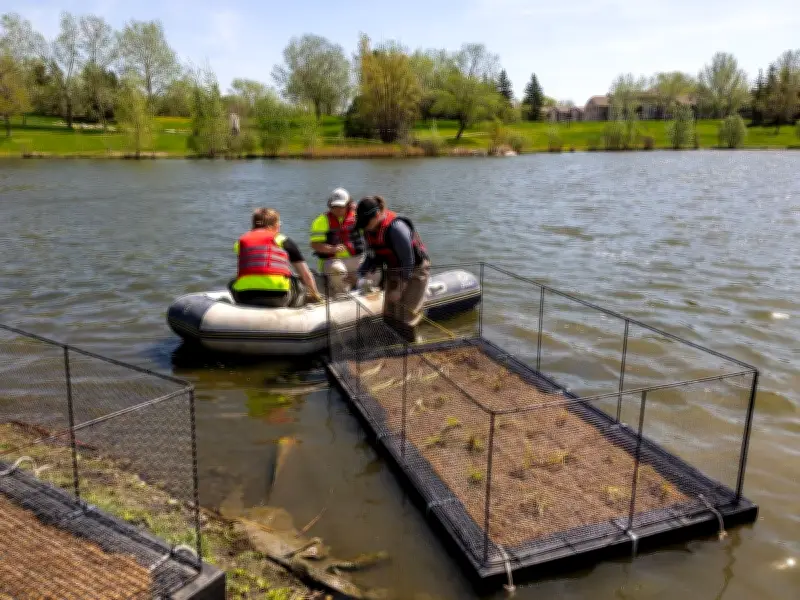
The City of Regina has launched a new clean-water environmental health initiative by installing floating treatment wetlands in several of its stormwater retention ponds. Students from Campbell Collegiate helped install the first six platforms last week at the Rochdale pond, located behind the North West Leisure Centre. More installations are planned this week at the Lakeridge and Lakewood basins, with assistance from other local schools.
What Is a Floating Treatment Wetland?
Floating treatment wetlands are platforms planted with native prairie sedge and rush grasses that naturally thrive in shallow water. As the plants grow, their roots extend downward into the water, filtering out excess nutrients and pollutants. The grasses are sourced from Saskatchewan and Alberta, promoting local biodiversity and providing habitat for wildlife such as red-winged blackbirds and pollinators.
Each platform is lined with coconut-fibre matting to secure the soil and fitted with a protective cage to prevent ducks and muskrats from eating the beneficial grasses. These wetlands are designed to be permanent installations lasting about 10 years, with periodic maintenance by city staff.

How Do They Improve Water Quality?
Shelley Wellman, the city's manager of environmental services, explained that the wetlands work to improve water quality in stormwater retention ponds before the water is released into Wascana Creek. Retention ponds collect runoff from storms, which often carries pollutants like dirt and fertilizers. These pollutants can cause an overgrowth of algae, leading to green water, unpleasant odors, and oxygen depletion that harms aquatic life.
“These floating wetlands help remove those excess nutrients, promote beneficial bacteria, and reduce algal blooms,” Wellman said. While plants along the water's edge perform similar functions, floating wetlands extend this natural filtration to the middle of the pond.
Why Is the City Using Them?
Previously, the city relied on aeration lines to add oxygen and promote beneficial plant growth. The floating wetlands serve as an eco-friendly, low-cost supplement to this existing system. The initiative supports healthier ecosystems and more sustainable neighborhoods, according to Wellman.
“Projects like this help support healthier ecosystems and more sustainable neighbourhoods for residents,” she said.