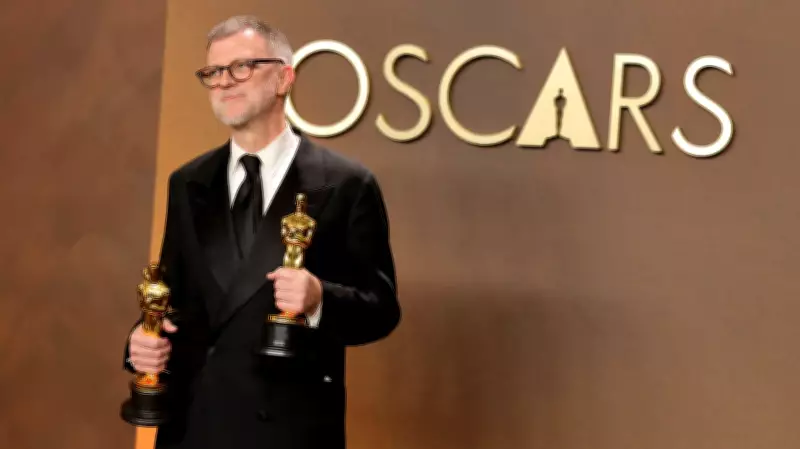
Paul Thomas Anderson Breaks Silence on Controversial Portrayal in Oscar-Winning Film
Following months of intense debate and speculation, acclaimed writer-director Paul Thomas Anderson has finally addressed the significant criticism surrounding how his award-winning film One Battle After Another portrays Black women. The director's comments came during a post-Oscars press conference, where he acknowledged the complex discussions that have followed his film throughout its successful awards season run.
Anderson Acknowledges "Complicated" Criticism
When questioned by HuffPost about the ongoing critique regarding the portrayal of Black women in his film, particularly Teyana Taylor's character Perfidia Beverly Hills, Anderson revealed that he was aware of the controversy. "I know a little bit about that critique," Anderson stated during the press conference. "I know that Teyana has talked about it a lot."
The director was referring to previous interviews in which Taylor, who received a Best Supporting Actress nomination for her performance, discussed the strong audience reactions to her character. Anderson elaborated on his approach to creating complex characters, noting that Perfidia was intentionally designed as a flawed individual.

"We have the portrayal of many different characters—in particular, her character, who is so flawed and, unfortunately, makes decisions that are detrimental to the revolution that she's trying to fight," Anderson explained. While he didn't explicitly address the racial politics within the film when directly questioned, he emphasized that the matter was inherently "complicated."
Intentional Complexity in Character Development
Anderson provided deeper insight into his creative process and the intentional complexity he sought to achieve with Perfidia's character. "We always knew that we were trying to make something complicated," the director revealed. "We knew that we weren't making something that was heroic, and we needed to lean into that."
The filmmaker specifically addressed how Perfidia's personal struggles were integral to her character development. "We needed to own the fact that this woman was suffering not only from postpartum depression, but she had issues of her own that she hadn't really reconciled with," Anderson stated.
Regarding Perfidia's antihero trajectory, which has received some criticism compared to other aspects of the film, Anderson offered a philosophical perspective. He explained how it can be "a very dangerous thing" when someone like her revolutionary character begins with noble intentions to change the world, "but you start to kind of become selfish and you read your own reviews."
Generational Storytelling and Future Implications
Anderson positioned Perfidia's character within a broader narrative framework focused on generational evolution. "The point of it is to set up a story of Willa, the next generation," he explained, referencing Perfidia's daughter, who is portrayed by newcomer Chase Infiniti.
The director posed a fundamental question central to his film's theme: "What happens when your parents, who are damaged and have handed quite a difficult history to you, how do you manage that?" Anderson concluded, "That's our story, and our story is in Chase and her evolution, in terms of the generational aspect. To try to do better."
Months of Debate Culminate in Oscar Night Discussion
Anderson's response follows months of intense debate surrounding One Battle After Another, which has continued even after the film's remarkable success at the Academy Awards. The politically charged action-dramedy secured six Oscars, including the prestigious awards for Best Picture, Best Director, and Best Adapted Screenplay for Anderson.
Since the film's initial premiere, critics and audiences have engaged in substantial discussion about its racial dynamics. Some viewers have argued that these dynamics occasionally weaken the storytelling, particularly in areas that could have benefited from deeper exploration. Specific concerns have centered on Perfidia's struggles with motherhood and postpartum depression, which some viewers felt were overshadowed by scenes that framed her through sexual objectification.

Throughout the entire awards season, Anderson had sidestepped questions about race and politics in his film, leaving audiences without direct clarification from the filmmaker himself. This silence had only intensified the ongoing discussions about these contentious aspects of the movie.
Reflections on Contemporary Relevance
Elsewhere in his post-Oscars interview, Anderson addressed questions about how his Oscar-winning film reflects contemporary society and future trajectories. Initially responding with humor—"I thought we were supposed to be partying"—the director eventually acknowledged the film's connection to current events.
"It obviously reflects what's happening in the world," Anderson stated. "In terms of where it's going, I don't know, but I know that the end of our movie is our hero, Willa, heading off to continue to fight against evil forces."
The director concluded with a hopeful note that echoed his Oscar acceptance speech: "And I think, like I said in my speech, bring, at least, common sense and decency back into fashion."
As the awards season concludes with One Battle After Another's significant Oscar victories, Anderson's recent comments provide the first substantial response to months of critical discussion about representation and storytelling in his acclaimed film.