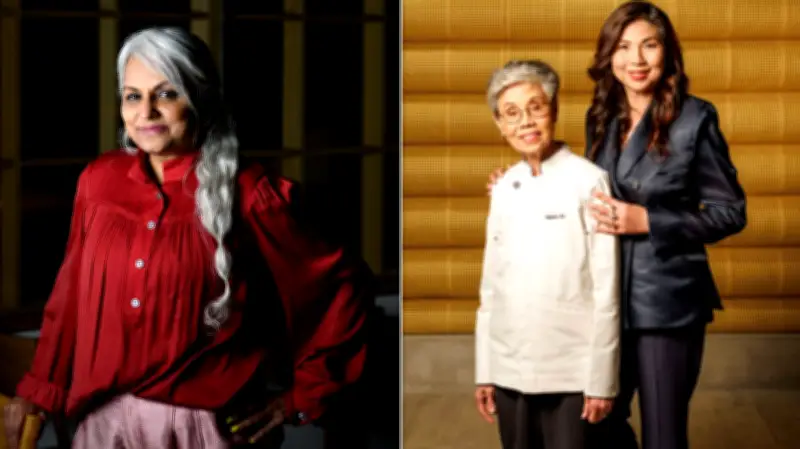
San Francisco's food scene thrives on the authentic, unapologetic cooking of immigrant chefs who refuse to dilute their traditions for mainstream palates. Heena Patel, co-owner and head chef at Besharam, and Monique An, co-owner of Crustacean, are two such chefs whose menus are deeply personal narratives of their heritage.
Chef Heena Patel: Cooking Autobiographically at Besharam
Patel's menu at Besharam is a tribute to her Gujarati roots. "My entire menu is very autobiographical. It brings out a lot of emotions," she says. A standout dish is the pakoras, a vegetable fritter made with chickpea flour, which holds special meaning: "The pakoras are my dad's favorite. I remember him asking my mom to make them as a late-night snack or when he had a beer." These fritters are a staple street food in Gujarat, often served with cilantro mint chutney and masala chai. For many diners, including the author, tasting them evokes powerful memories of family and home.
Patel is proud to showcase Gujarati cuisine, which is less common in U.S. Indian restaurants. "I'm glad I'm cooking Gujarati food because it isn't often showcased. It requires so many layers of traditional cooking techniques," she explains. Her restaurant's name, Besharam, means "shameless" in Hindi, reflecting her bold approach. Patel, who has no formal culinary training, credits La Cocina, a nonprofit that supports women chefs of color, for helping her launch her business. She now serves on its board of directors.

Monique An: Honoring Family Legacy at Crustacean
Monique An's family fled Vietnam as refugees in the 1970s. Her mother, Helene An, opened Thanh Long in 1971, introducing Vietnamese flavors to San Francisco. "My mother, she was thrown into this position where she had to survive. She had three kids, and we had to make the restaurant work," Monique recalls. "She was fearless. She cooked without worrying about whether people are going to like it or not. She was true to her roots — but also innovative."
That innovation led to the creation of garlic noodles, a fusion dish blending Vietnamese, Chinese, French, and Italian influences, often served with roasted crab. The recipe is a closely guarded family secret. "You could lose everything in the blink of an eye," Monique says. "What you can't lose is your knowledge, your culture, what's in your head and heart. It's a gift to pass on to your children."
Both chefs emphasize the importance of staying true to their heritage rather than assimilating. "My mother taught us that it was important to showcase our culture but to also be creative to not let the 'rules' of what Vietnamese should be, confine us," Monique says. "By introducing our friends and patrons to our version of it, we're telling the story of our family."
The Power of Authentic Immigrant Cooking
These chefs' dedication to authenticity challenges the "melting pot" narrative. Instead, they celebrate the persistence of individual culinary traditions. For Patel, cooking is a conversation with her ancestors. "My grandmother, my masis — they cooked amazing food, but they never called themselves 'chefs.' They did it without any recognition or recipes. It was practice and intuition," she says.
For many children of immigrants, encountering such dishes evokes deep emotions. "When you're a little kid, when you're out, you're trying to eat hamburgers. You're trying to be an American," Monique recalls. "I remember always coming back home and having the comfort of my grandmother and mother's cooking — and that grounded me."
San Francisco's culinary landscape is enriched by these stories. As the author reflects, "While New York, New Orleans and San Francisco might indeed be portals for cultural nirvana, there are kitchens in every nook of this country that might help remind you of your most authentic self. And toiling away in them are the cooks who've insisted on doing things exactly their way."