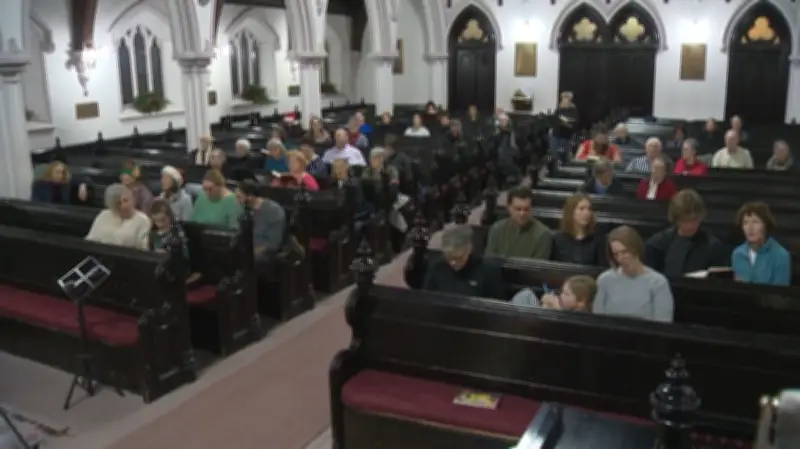
Three historic Halifax congregations have voted to amalgamate, forming a single new entity called Halifax United Church. The decision, announced by the United Church of Canada's Maritime Conference, merges Fort Massey United Church, St. Matthew's United Church, and St. Andrew's United Church into one parish effective July 1, 2026.
Consolidation of Resources
The amalgamation comes as many mainline Protestant churches in Canada face declining membership and rising maintenance costs for aging buildings. By joining together, the three congregations aim to share resources, reduce overhead, and create a sustainable model for ministry in central Halifax. The new church will hold services at the Fort Massey location on Queen Street, while the other two buildings will be sold.
“This is a time of both grief and hope,” said Rev. Dr. Susan Johnson, chair of the amalgamation transition team. “We are losing familiar spaces, but we are gaining a stronger, more vibrant community of faith. Our shared mission will continue in a new form.”

Historical Background
Fort Massey United Church, founded in 1870, has long been a landmark in the city. St. Matthew's United Church dates back to 1749, making it one of the oldest Protestant congregations in Canada. St. Andrew's United Church was established in 1820. All three have faced dwindling attendance over the past two decades, with average weekly attendance falling below 100 at each location.
The amalgamation process began in 2024 after a series of joint meetings and feasibility studies. A vote held in March 2026 saw overwhelming approval from all three congregations, with 85% of members supporting the merger.
Impact on Community
The new Halifax United Church will continue outreach programs including a food bank, community meals, and partnerships with local shelters. The transition team has also pledged to preserve archival materials from each founding church. The proceeds from the sale of the St. Matthew's and St. Andrew's buildings will fund a new endowment for community ministry.
“We are not closing; we are transforming,” said Rev. Mark O'Brien, who will serve as interim minister for the new congregation. “Our mission to serve God and neighbour continues, but with a sustainable structure for the future.”
The amalgamation reflects a broader trend across Canada, where the United Church of Canada has seen its membership decline from over one million in the 1960s to roughly 250,000 today. Similar mergers have occurred in cities like Toronto, Winnipeg, and Vancouver.