In the sun-baked plains of southeastern Turkiye lies a city of profound spiritual significance, a place where the histories of three of the world's major religions are intricately woven into the very fabric of its streets and stones. Sanliurfa, often called the "City of Prophets," stands as a remarkable testament to centuries of shared faith and cultural convergence.
A Sacred Tapestry in Southeastern Anatolia
Sanliurfa, historically known as Urfa and Edessa, is located in the Southeastern Anatolia region. It is a city revered by Muslims, Christians, and Jews alike, each tracing a connection to pivotal prophets and biblical events. For Muslims, the city is deeply associated with the Prophet Abraham (Ibrahim), who Islamic tradition holds was born in a cave located within the city's boundaries. This sacred site, known as the Birth Cave of Abraham (Mevlid-i Halil Mağarası), is a major pilgrimage destination.
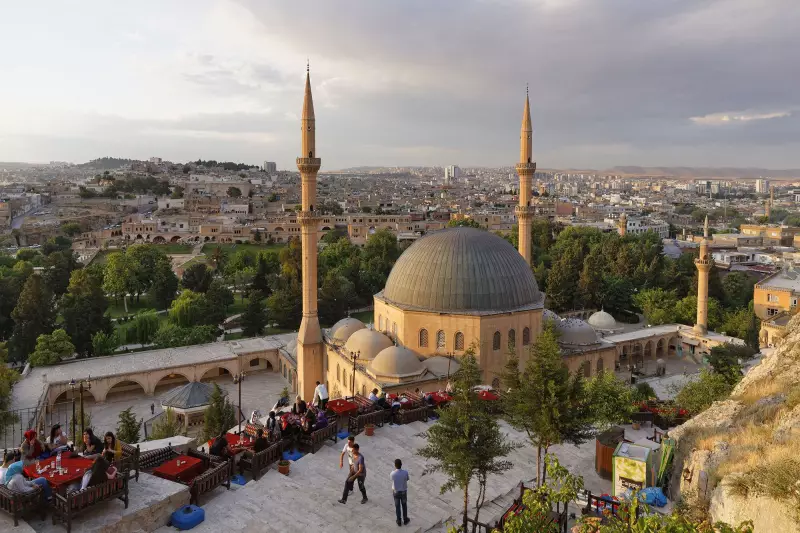
The city's landscape is dominated by the beautiful complex surrounding the cave, including the tranquil Gölbaşı Garden with its sacred fish-filled ponds and the historic Dergah Mosque. The image of a serene tea garden perched above the Dergah Mosque encapsulates the peaceful coexistence that defines the area.

Roots in Christianity and Judaism
Christian tradition also holds Sanliurfa in high esteem, identifying it as the ancient city of Edessa. It is believed by many to be the site where the Mandylion, a holy relic bearing the image of Jesus, was once kept. This connection made it a significant center for early Christianity.
For Jews, the city's link to the Patriarch Abraham, a foundational figure in Judaism, grants it a unique place in religious history. The shared veneration of Abraham creates a powerful symbolic bridge between the faiths in this ancient setting. This multilayered heritage makes Sanliurfa a living museum of interfaith history, where the narratives of Islam, Christianity, and Judaism are not just parallel stories but threads in a single, complex tapestry.
A Modern Beacon of Cultural Heritage
Today, Sanliurfa is more than an archaeological relic; it is a vibrant urban center that actively preserves and showcases its unparalleled heritage. The city attracts scholars, pilgrims, and tourists from around the globe, all drawn to witness a place where three major world religions align geographically and spiritually. Its status highlights the potential for historical understanding to foster mutual respect in the modern world.
The preservation of sites like the Balıklıgöl complex (the Pool of Abraham) and the ongoing archaeological work at nearby Göbekli Tepe—one of the world's oldest temple sites—further cement Sanliurfa's position as a crucial node in the story of human civilization and belief. It stands as a powerful reminder of the deep, interconnected roots of faith in the Anatolian region.