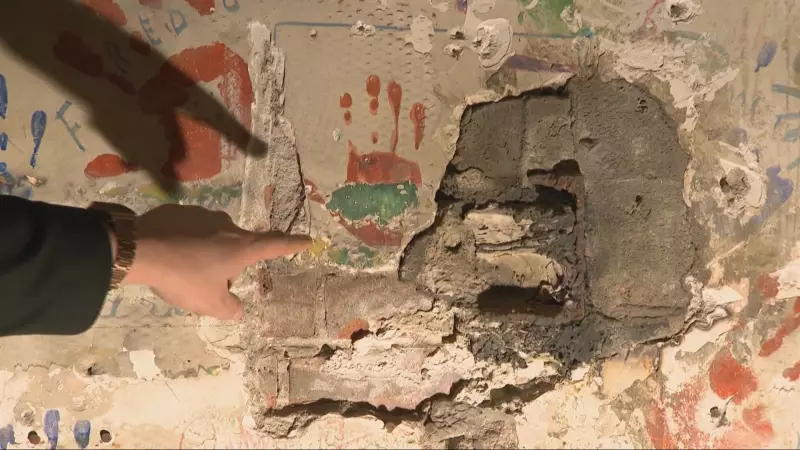
A forgotten chapter of Montreal's rich cultural tapestry has resurfaced in the most unexpected of places. Construction workers recently stumbled upon a remarkable artifact from the city's bohemian past: a basement wall on Crescent Street covered in handprints, silently marking the location of the legendary Chez Bozo, a pivotal artistic hub of the 1950s.
A Basement Time Capsule
The discovery was made purely by chance during renovation work. The wall, laden with the imprints of hands from a bygone era, serves as a direct, physical link to a time when the area pulsed with creative energy. This unassuming basement was once the foundation of Chez Bozo, a club and gathering spot that became a crucible for artists, musicians, and intellectuals in post-war Montreal.
While the exact date of the find was December 21, 2025, the wall itself whispers of the mid-20th century. The handprints are believed to belong to patrons and performers who frequented the establishment, a common practice in venues seeking to capture the spirit of their community. This tangible relic offers historians and the public a unique glimpse into the city's social history, far beyond what photographs or documents can convey.

The Legacy of Chez Bozo
Chez Bozo was more than just a nightclub; it was a foundational institution in Montreal's artistic landscape. During the 1950s, it provided a vital space for avant-garde expression and cultural exchange at a time when such venues were rare. Its location on Crescent Street, now known for its bars and restaurants, was then part of a burgeoning bohemian district that fostered a unique Quebecois cultural identity.
The club is remembered for its eclectic mix of live jazz, poetry readings, and lively debates, attracting a crowd that helped shape the province's modern artistic movements. The rediscovery of its physical remnants underscores how the city's contemporary vibrancy is built upon layers of hidden history, waiting to be found.
Preserving Montreal's Cultural Memory
The accidental uncovering has sparked conversations about preservation and urban memory. It raises important questions about what other historical treasures lie concealed within Montreal's built environment, often overlooked during modern development. Heritage advocates are likely to examine the site closely, evaluating the potential for conserving this unique artifact or at least documenting it thoroughly before any further work proceeds.
This find on Crescent Street is a powerful reminder that history is not always confined to museums or archives. It can exist in the very fabric of a city's streets and buildings. For Montrealers and Canadians at large, it reinforces the importance of recognizing and protecting the physical spaces where our cultural and artistic heritage was forged, ensuring that the stories of places like Chez Bozo are not lost to time.