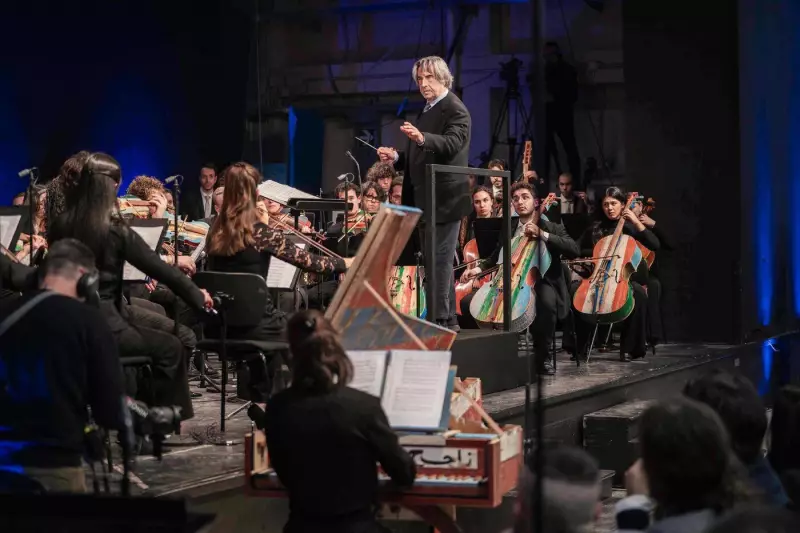
In a remarkable fusion of social commentary, art, and rehabilitation, a prison in Milan, Italy, became the stage for an unprecedented musical performance. The event featured instruments crafted from the very timber of boats used by migrant smugglers, played by inmates themselves under the baton of a world-renowned conductor.
From Wreckage to Resonance: The Birth of the Orchestra del Mare
The concert took place on Saturday, January 10, 2026, inside the Opera Prison in Milan, located in northern Italy. The instruments used were not ordinary; they were built by inmates from the salvaged wood of vessels that had sunk while attempting to transport migrants across the Mediterranean Sea. This project gave rise to the Orchestra del Mare, or "Orchestra of the Sea," symbolizing transformation and hope.
Leading this unique ensemble was the celebrated Italian conductor Riccardo Muti. The image from the event, distributed on Monday, January 12, 2026, by the Casa Fondazione Dello Spirito e delle Arti, captures Muti passionately conducting the orchestra within the prison walls. The visual, provided by photographer Marco Borrelli, highlights the profound contrast between the setting and the soaring music.

A Concert with a Deeper Message
This was far more than a simple performance. The initiative served multiple powerful purposes. Primarily, it is a project of inmate rehabilitation and skill-building, offering participants a chance to learn craftsmanship and musicianship. Secondly, it acts as a poignant memorial, transforming symbols of a human tragedy—the dangerous and often deadly migrant journeys—into instruments of beauty and reflection.
The event underscores themes of redemption, second chances, and the universal power of music to bridge profound divides. By repurposing the wood from smuggler boats, the project literally and metaphorically reshapes a narrative of despair into one of creation and community.
Broader Implications and Cultural Impact
While the concert was a standalone event, its resonance extends beyond the prison walls. It challenges public perceptions of incarceration and demonstrates the potential for creative programs to foster positive change within correctional systems. The collaboration with a figure of Maestro Muti's stature brings significant cultural attention to these efforts.
The project also silently comments on the ongoing European migrant crisis, using art to reflect on the complex issues of migration, human smuggling, and loss at sea. It provides a platform for stories that are often reduced to statistics, humanizing them through a shared artistic experience.
In conclusion, the Milan prison concert stands as a testament to innovation in social programs. It proves that art can emerge from the most unlikely materials and circumstances, offering a path to rehabilitation for inmates while honoring the memory of those who risk everything in search of a better life.