The Calgary Stampede Parade drew an estimated two million people to the city's streets on July 9, 2026, marking the start of 10 days of festivities that unite residents and visitors alike under the iconic cowboy hat.
A Family Debate About Belonging
For one Calgary family, the first debate of the week wasn't about school pickup or groceries—it was about when to attend the parade. As Osama Elemary, a heritage and cultural strategy consultant, recounts, the negotiation revealed a deeper question: not about scheduling, but about belonging.
The parade is more than just the festival's opening act. It is a public declaration, a moment when two million people announce together that for 10 days they will wear the hat and pull on the boots. "The hat gives us the spark to rebel against the ordinary," Elemary writes.

A Parade of Joy and Connection
Elemary arrived early to claim a good spot along the route and found the crowd enormous. "Joy was the most common expression on every face—even the babies in their strollers weren't crying; they were enjoying the strangers surrounding them on every side," he observes.
Between marching bands and horse-drawn wagons, Elemary spotted Maria, his son Abdullah's basketball teammate's mother. Normally quiet and reserved, Maria was lit up with excitement. "Wait a few minutes," she said. "My mother is in the parade."
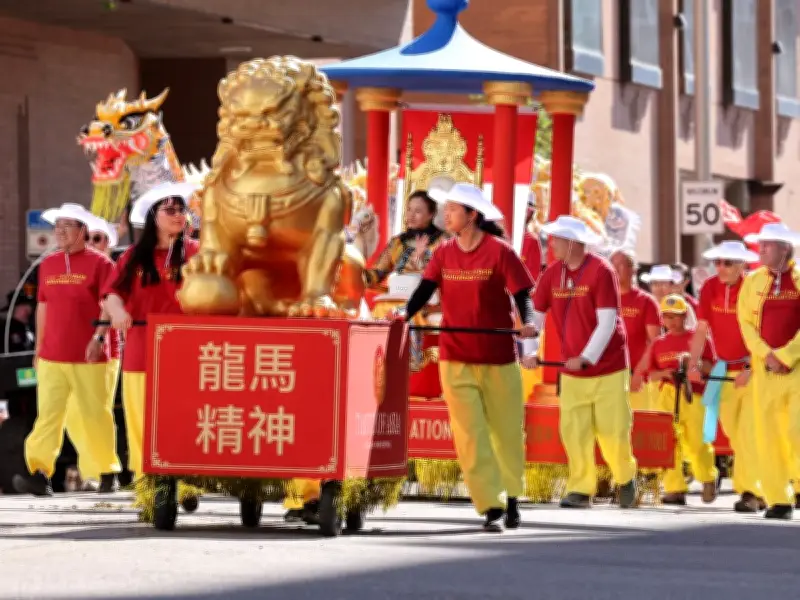
Moments later, Maria's mother passed by in full traditional Chinese dress, marching down the route. That stretch of sidewalk became a small storm of feeling. "Hello Mama! Enjoy! You're amazing!" Maria and her sister shouted over the music.
Everyday Faces in the Parade
A few floats later, Elemary's son Firas's school teacher rolled past, sitting in an old cart among people in traditional clothes. Two different corners of the family's ordinary week rode by in the same parade, highlighting the inclusive nature of the event.
Elemary, who works in heritage, notes that some cities have no identity—they are functional places to live but lack memory. "Some cities are a homeland because they manufacture the memories of the people around them," he writes. "Memories are not made by buildings or streets, they are made by people."
The Stampede's Invitation
The Stampede never asks anyone to take something off in order to put the hat on. Maria's mother didn't have to choose between her Chinese dress and the parade—she wore both in the same hundred metres. "The festival doesn't replace your identity. It adds a layer on top of it, and somehow the layer fits everyone," Elemary explains.
That is the Stampede's real invitation: to be Calgarian, whatever your origins, for 10 days. "You get to be a cowboy—Calgary flavour. No requirement to have been born here, lived here or worked here. The only condition is that you join us," he writes.
A City That Wishes You Well
Elemary notes that every stranger on the parade route wished him a happy Stampede. "When was the last time a stranger in a big city wished you anything at all?" he asks.
Calgary hands you an identity you can hold in your hand—a hat. "You don't need cowboy ancestors to wear it. You put it on, it belongs to you and, somehow, you belong to it," Elemary concludes. Two million people did exactly that this week. And meant it.
Osama Elemary is a heritage and cultural strategy consultant.