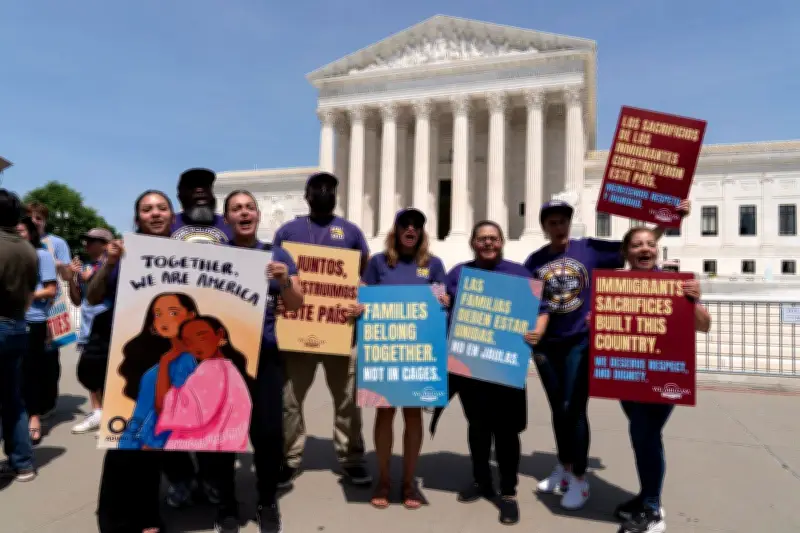
President Donald Trump announced on Wednesday that he will formally request the U.S. Supreme Court to rehear the landmark birthright citizenship case, challenging the recent 6-3 ruling that upheld automatic citizenship for children born in the United States to undocumented immigrants.
Background of the Ruling
The Supreme Court's decision on June 30, 2026, affirmed that the 14th Amendment's Citizenship Clause guarantees birthright citizenship, a principle that has been settled law for over a century. The ruling was a major defeat for the Trump administration, which had argued that children of non-citizens should not automatically receive citizenship.
Trump's Announcement
Speaking at a press conference in Washington, Trump said, "We will be asking the Supreme Court to reconsider this decision. Birthright citizenship is a magnet for illegal immigration, and we must protect the integrity of our immigration system." According to White House officials, the petition for rehearing will be filed within the next 30 days.

Legal Experts Weigh In
Legal analysts expressed skepticism about the chances of success. "Rehearings are extremely rare," said constitutional law professor Sarah Jenkins of Georgetown University. "The court typically only grants them when there is a clear error or new evidence. Here, the majority opinion was thorough and relied on long-standing precedent."
Reactions from Both Sides
Activists who celebrated the original ruling outside the Supreme Court expressed disappointment but determination. "We knew this fight wasn't over," said Maria Gonzalez, director of the Immigrant Rights Coalition. "We will mobilize to defend the Constitution once again." Meanwhile, conservative groups praised Trump's move. "The president is right to challenge an overreaching decision that ignores the intent of the 14th Amendment," said James Carter of the American Heritage Foundation.
Next Steps
The Supreme Court has no obligation to grant the rehearing. If denied, the ruling stands. If granted, the case would be reargued, potentially leading to a different outcome. The process could take months. The issue remains politically charged, with polls showing a divided public: 52% support birthright citizenship, while 44% oppose it, according to a recent Pew Research Center survey.