A Monumental Archaeological Find: The Roman City That Dwarfs Disneyland
In a stunning revelation that has captivated historians and archaeologists worldwide, the discovery of an ancient Roman city of immense proportions has been announced. This sprawling urban center, meticulously unearthed through extensive excavations, is estimated to be a staggering ten times larger than the entire Disneyland theme park complex. The sheer scale of this find offers unprecedented insights into the architectural ambition and societal organization of the Roman Empire during its peak.
The Heart of Entertainment: The Great Theater
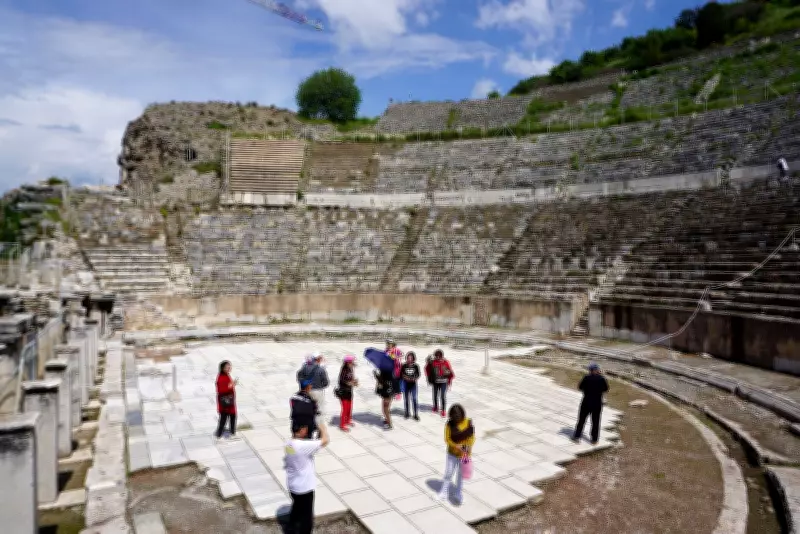
Among the most significant structures uncovered within this vast ancient metropolis is the Great Theater. Historical evidence and architectural analysis confirm that this grand amphitheater was the site of gladiatorial battles, a central form of public spectacle and entertainment in Roman culture. The preservation of this theater provides a tangible connection to the brutal yet culturally pivotal contests that once enthralled thousands of spectators.
The discovery challenges previous assumptions about the distribution and size of major Roman settlements outside of Italy. Researchers are now re-evaluating historical records and maps to understand the city's role in trade, military strategy, and regional governance. The layout suggests sophisticated urban planning, with forums, residential districts, and infrastructure that supported a large population.

Contextualizing the Scale
To fully grasp the magnitude of this archaeological site, consider the comparison to Disneyland. The famous Anaheim park covers approximately 85 acres. This newly discovered Roman city, therefore, spans an area of around 850 acres, making it one of the largest continuous urban finds from antiquity in recent decades. Such a scale indicates it was a major hub, possibly a provincial capital or a crucial military and economic center.
This find is not just about size; it's a window into daily life, governance, and entertainment in the ancient world. Artifacts recovered from the site, including pottery, coins, and inscriptions, are expected to shed light on the city's timeline, its inhabitants, and its interactions with the broader Roman world. The preservation of the Great Theater, in particular, allows for detailed study of Roman engineering and public entertainment practices.
As excavations continue, archaeologists anticipate uncovering more structures, such as temples, baths, and marketplaces, which will further illuminate the city's complexity. This discovery underscores the enduring legacy of Roman civilization and the ongoing potential for groundbreaking finds that reshape our understanding of history.