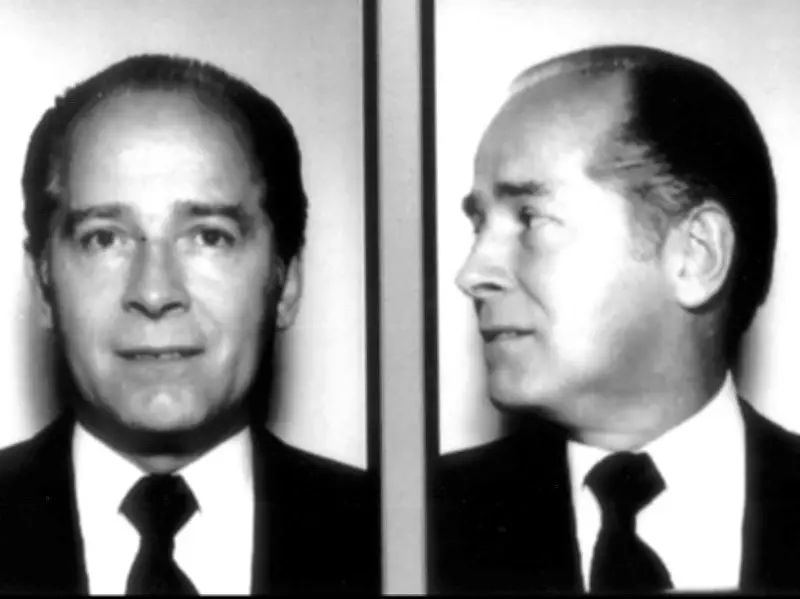
The long-concealed autobiography of James "Whitey" Bulger, the infamous Boston mob boss, has finally come to light, shedding new light on the criminal underworld that once dominated America's East Coast. This handwritten manuscript, discovered after Bulger's arrest, is now at the center of a legal battle, revealing the inner thoughts of a man whose reign of terror ended with his brutal jailhouse death in 2018.
The End of an Era and a Hidden Legacy
When Bulger was killed in prison, it marked the definitive end of the Irish Mob in the United States, an organization that had been dwindling for decades. Now, the Boston Herald has published the first installment of his secret autobiography, providing unprecedented access to the mind of one of history's most notorious gangsters. The manuscript was found as part of a Post Conviction Relief motion filed in Florida on Monday, initiated by former FBI agent John "Zip" Connolly, who hopes it will clear his name of a second-degree murder conviction.
Bulger's Bitter Recollections and Legal Gambits
In his writings, Bulger expresses a deep sense of betrayal by his former associates, particularly Stephen "The Rifleman" Flemmi and John "The Executioner" Martorano, who collectively committed 43 murders and later turned informant against him. He claims the purpose of his book is to expose the lies of those who cooperated with authorities to secure their freedom, stating, "I have no intention of ever giving testimony in court against these people — I seek no deal and will freely write the truth about many crimes."

Connolly's legal team, led by attorney Peter Mullane, believes the autobiography could bolster their case to overturn his conviction, arguing that it reveals flaws in the prosecution's reliance on witness testimonies. Bulger himself writes that law enforcement may realize they were deceived, calling his former partners "old partners in murder" who played them for fools.
Life on the Run and Startling Revelations
The autobiography details Bulger's escape from justice after being tipped off by an ex-FBI agent about his impending indictment on December 23, 1994. He fled with his girlfriend, Catherine Greig, stashing money in safety deposit boxes under aliases like Thomas Baxter in locations including New York, Florida, London, and Paris. During his 16 years as a fugitive, Bulger admitted to traveling across the U.S., visiting museums and historic sites, while living in Santa Monica, California, where he was eventually captured in 2011 with over $822,000 hidden in his condo wall.
Among the most shocking revelations are that Bulger returned to Boston multiple times while on the FBI's Most Wanted List, driving a nondescript Honda Accord while armed and disguised. He chose Santa Monica for its beach proximity and diverse population, noting the presence of transients and Jewish communities who "kept to themselves (he liked that)." His time there was marked by anxiety, as helicopters overhead during the O.J. Simpson trial nearby made him nervous.
Reflections on a Missed Normal Life
Despite his criminal exploits, Bulger's writings reveal a wistful side, as he reflects on what could have been. He describes aspirations for a conventional life, with a steady job and family, punctuated by Boston Bruins games. While incarcerated in Alcatraz, he planned to go straight upon release, but those hopes faded. After the prison closed in 1963, he was transferred to Leavenworth and released in 1965 after volunteering for CIA-sponsored LSD experiments, which he claimed caused lasting sleep issues and hallucinations, such as seeing skin fall off people.
In a poignant moment, Bulger writes, "He had planned to get out and try for one year to get a good job, a woman, and go straight. … it did not work out," adding that he emerged from prison "smarter and stronger than before he went in." This blend of criminal bravado and personal regret paints a complex portrait of a man whose legacy continues to fascinate and horrify.