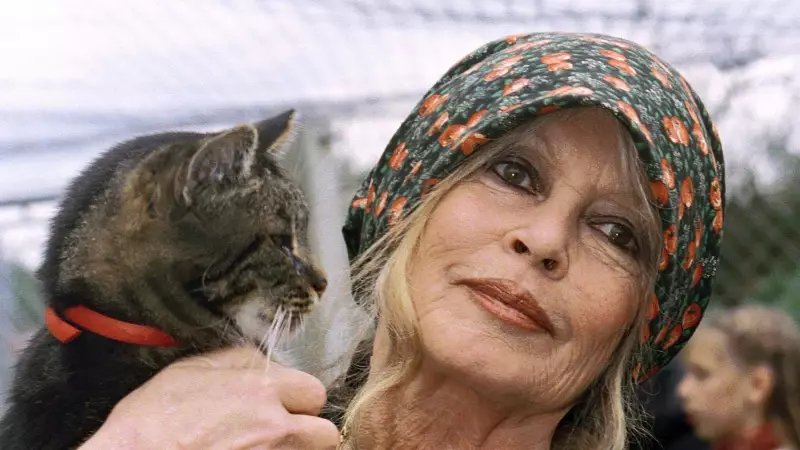
The world has lost a cinematic legend and one of France's most controversial public figures. Brigitte Bardot, the iconic French actress and animal rights activist, died on Sunday at her home in southern France. She was 91 years old. The news was confirmed by Bruno Jacquelin of the Brigitte Bardot Foundation for the protection of animals. No cause of death was given, and funeral arrangements are pending. Bardot had been hospitalized last month.
From Teen Bride to Global Sex Symbol
Bardot rocketed to international fame in 1956 with the film "And God Created Woman." Directed by her then-husband, Roger Vadim, the movie scandalized audiences with its portrayal of a sexually liberated teen bride, including scenes of Bardot dancing nude. Her tousled blonde hair, pouty lips, and voluptuous figure became symbols of a France shedding its post-war conservatism.
Her career spanned roughly 28 films and three marriages, making her one of the most recognizable faces of the 20th century. In 1969, her features were chosen as the model for "Marianne," the national emblem of France, appearing on statues, stamps, and coins. French President Emmanuel Macron paid tribute on social media, writing, "We are mourning a legend."

A Second Act: Militant Animal Rights Advocacy
After retiring from film at age 39 in 1973, Bardot reinvented herself as a fierce and uncompromising animal rights activist. She sold her jewelry and memorabilia to fund the Brigitte Bardot Foundation. Her campaigns were global and relentless:
- Traveling to the Arctic to protest the slaughter of baby seals.
- Campaigning against the use of animals in laboratories.
- Urging South Korea to ban dog meat and writing to U.S. President Bill Clinton about dolphins.
- Opposing traditional practices like the Palio horse race and Muslim ritual slaughter.
"Man is an insatiable predator," she told The Associated Press in 2007. "I don't care about my past glory. That means nothing in the face of an animal that suffers." Her activism earned her the Legion of Honor, France's highest award, in 1985.
Controversy and a Political Shift to the Far-Right
Bardot's later years were marked by controversy as her animal rights rhetoric increasingly merged with anti-immigrant and far-right political views. She was convicted and fined five times for inciting racial hatred, often related to her comments about Muslim religious practices.
Her 1992 marriage to Bernard d'Ormale, an adviser to far-right National Front leader Jean-Marie Le Pen, solidified her political shift. She publicly supported both Jean-Marie Le Pen and his daughter, Marine Le Pen, who now leads the renamed National Rally party. In 2018, she also dismissed the #MeToo movement as "hypocritical" and "ridiculous."
Born into a wealthy Parisian family on September 28, 1934, Bardot was a shy child who studied ballet. Discovered for the cover of Elle magazine at 14, her life was forever changed by Vadim, who crafted her bombshell image. Despite her fame, she struggled with the spotlight, blaming press intrusion for a suicide attempt after the birth of her only son, Nicolas, in 1960. She later described herself as chronically depressed and unready for motherhood.
Her film legacy, including works like "Contempt" (1963) and "The Truth" (1960), cemented her status, though she often downplayed her own talent. "It's an embarrassment to have acted so badly," she once said. Brigitte Bardot's life was a complex tapestry of unparalleled fame, passionate activism, and divisive politics, ensuring her place as a figure who will be debated and remembered for generations.