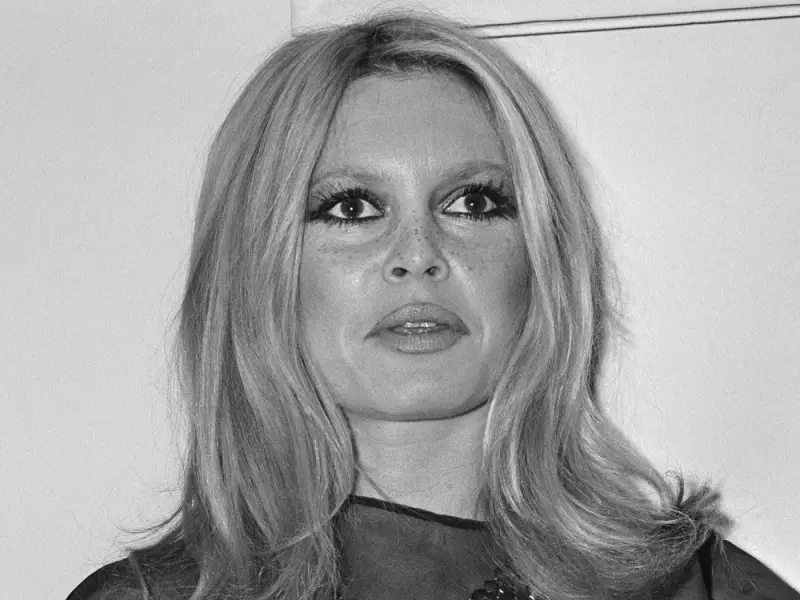
The world has bid farewell to a cultural icon. Brigitte Bardot, the French actress and animal rights activist, has died at the age of 91. Known globally by her initials BB, Bardot first captivated audiences as a voluptuous sex symbol in the 1950s before making a dramatic exit from the spotlight to dedicate her life to animal welfare.
From Screen Siren to Activist
Bardot's journey from cinematic legend to outspoken activist is a story of radical reinvention. Born in Paris on September 28, 1934, she was raised in a traditional Catholic family. Her film career, though brief, left an indelible mark. With her kohl-rimmed eyes, signature pout, and uninhibited screen presence, she was often compared to Marilyn Monroe and became a symbol of liberated sexuality in post-war France.
Her breakthrough came in 1956 with the film "And God Created Woman," directed by her then-husband Roger Vadim. A scene featuring Bardot dancing a passionate mambo in a daringly slit skirt cemented her status as a film goddess and sparked controversy with censors. She appeared in roughly 50 films, with her most critically acclaimed role coming in 1963's "Contempt" by Jean-Luc Godard.

The Decision to Leave Fame Behind
Despite her fame, Bardot struggled with the intense objectification that came with it. She once stated she grew "sick of being beautiful every day." In 1960, on her 26th birthday, she attempted suicide. Then, in a decisive move in 1973, just before turning 40, she permanently retired from acting.
"I knew my career was based entirely on my physique," she explained in a 1978 interview. "So I decided to leave cinema just as I have always left men: first." She turned her formidable energy and public profile toward a new passion: animal rights.
A Fierce Advocate for Animals
Bardot's second act was defined by her uncompromising activism. She founded the Brigitte Bardot Foundation for the welfare and protection of animals in 1986, using her personal wealth and celebrity to champion the cause. Her advocacy was not without controversy; she was known for her blunt, often provocative statements and was convicted multiple times in France for inciting racial hatred due to her inflammatory comments about Muslim and immigrant communities, which she framed as criticism of practices like ritual slaughter.
Her personal life included four marriages. She had one son, Nicolas-Jacques Charrier, with her second husband, actor Jacques Charrier. In her later decades, she remained a polarizing but undeniably significant figure, remembered both for revolutionizing on-screen sexuality and for her lifelong, passionate defense of animals.
Bardot's legacy is a complex tapestry of breathtaking beauty, cinematic history, and fierce, controversial conviction. She lived by her own rules, first captivating the world and then challenging it, leaving behind a legacy that stretches far beyond the silver screen.