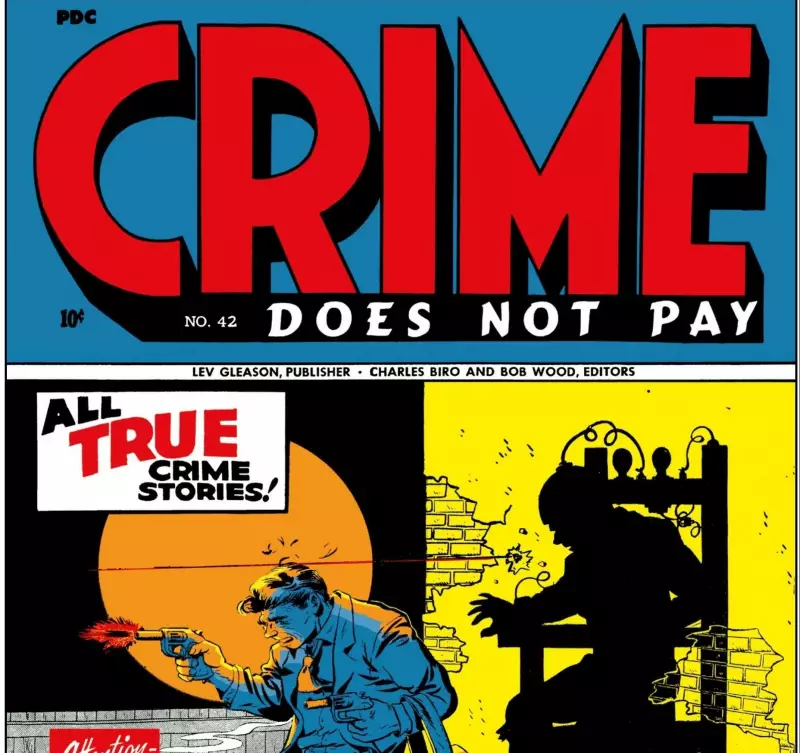
The lurid pages of mid-century crime comics promised one clear moral: crime does not pay. For Bob Wood, the co-creator of the genre's most successful title, that fictional warning became a horrifying reality when his life of booze and violence culminated in a real-life murder charge.
The Rise of a True Crime Empire
During the 1940s and 1950s, newsstands across Canada and the United States were flooded with sensational true crime comics. The undisputed king of this genre was Lev Gleason's 'Crime Does Not Pay', a publication that at its peak sold an astonishing six million copies per month. The comic was the brainchild of an unlikely duo: the gregarious artistic genius Charlie Biro and his more reserved partner, Bob Wood.
Launched in 1942, each ten-cent issue served up cautionary, four-colour tales of infamous criminals like Baby Face Nelson and Machine Gun Kelly, narrated by a ghoulish figure called Mr. Crime. The stories always ended with a moral lesson—the killer in the electric chair or riddled with police bullets. The comics were a massive hit, particularly with older teenage boys and young men drawn to their depictions of adult themes, violence, and sex.

A Life of Excess and a Deadly Descent
The success of Crime Does Not Pay made its creators wealthy, but both Biro and Wood were known for their lavish lifestyles, fondness for women, and heavy drinking. Their boss, the progressive publisher Lev Gleason, once remarked they spent money faster than they made it. The pair even maintained a love shack at Manhattan's Irving Hotel for trysts with female fans.
The comic's reign ended in 1955 with issue #147, largely doomed by the puritanical Comics Code Authority sparked by critic Dr. Fredric Wertham. Canada had preemptively banned such crime comics in 1949. After the shutdown, Biro moved on to a graphic artist role at NBC. For Bob Wood, however, the collapse sent him into a tailspin. His drinking worsened, and he was reduced to pitching cartoons to sleazy soft-core porn comics.
Life Imitates Art: A Murder at the Irving Hotel
On August 27, 1958, Wood's dramatic fall played out on the front pages of New York tabloids. A cab driver, Paul Feingold, reported that a dishevelled Wood confessed to him: "I'm in terrible trouble... I killed a woman who was giving me a bad time in Room 91 of the Irving Hotel."
Police rushed to the hotel room near 14th Street and Irving Place. Inside, they found a scene of devastation: empty liquor bottles and the battered body of 45-year-old Violette Phillips, a divorcee, lying in a blood-drenched negligee. Wood and Phillips, who shared an affinity for sex and alcohol, had been on an 11-day bender at the hotel before an argument turned fatal. Wood had bludgeoned her to death with an electric iron.
In a bitterly ironic twist, one of the men who made a fortune preaching that crime doesn't pay was arrested for murder. Bob Wood pleaded guilty to first-degree manslaughter and was sentenced to three years in Sing Sing prison.
A Grim Finale on the New Jersey Turnpike
Released in 1963, Wood's career was destroyed. He took a job as a dishwasher at a New Jersey greasy spoon. His problems persisted, with rumours of gambling debts and connections to unsavoury characters from his time in prison. His story reached its final, grim chapter on November 7, 1966.
At age 49, Bob Wood was found dead on the New Jersey Turnpike. Some sources claimed he was struck while trying to cross the highway; others whispered of more sinister dealings. Regardless of the exact circumstances, the fate of the man behind Crime Does Not Pay served as a dark, real-world epilogue to the comics he once crafted. For Bob Wood, crime ultimately did not pay.