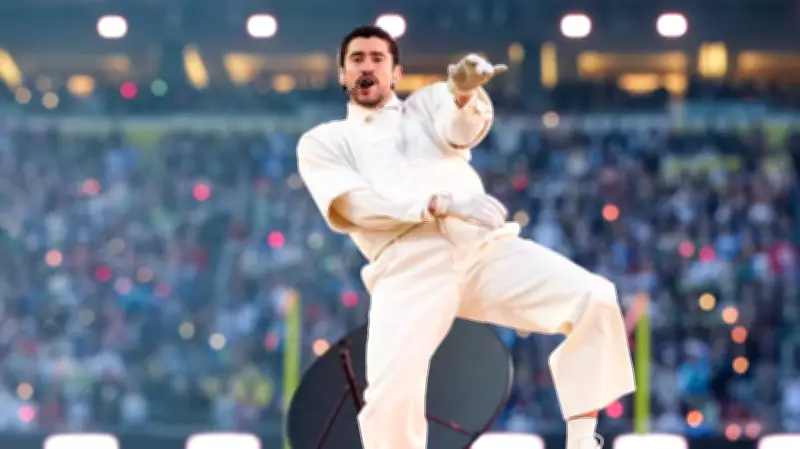
Unpacking the Hidden Layers of Bad Bunny's Super Bowl Spectacle
Bad Bunny's headline performance at the Super Bowl LX Halftime Show was far more than just a musical extravaganza. It was a meticulously crafted narrative, brimming with symbolic gestures and subtle nods that resonated deeply with both his long-time followers and new audiences. The show, held at Levi's Stadium in Santa Clara, California, on February 8, 2026, served as a powerful platform for cultural expression and personal storytelling.
The Grammys and a Symbolic Handoff
One of the most poignant moments occurred when Bad Bunny handed his Grammy award to a young boy on stage. While initial speculation suggested the child might be Liam Conejo Ramos, a 5-year-old detained by ICE, it was later confirmed to be child actor Lincoln Fox, dressed as a youthful version of the artist. This act represented Bad Bunny passing his success to his younger self, reinforcing his message of self-belief. Earlier, he directly addressed the camera, stating his presence at the Super Bowl was a testament to never giving up on his dreams.
A Surprise Wedding and Celebratory Cameos
In a heartwarming segment, a couple was engaged and then married live on stage, just before Lady Gaga made a surprise appearance to perform a salsa-inspired rendition of "Die With A Smile." Reports from The Hollywood Reporter indicate the bride and groom had originally invited Bad Bunny to their wedding. When he was unable to attend, he reciprocated by inviting them to tie the knot during his monumental performance. The celebration continued as they cut a wedding cake together, adding a personal touch to the global event.

Political and Cultural Symbolism in Attire and Imagery
Bad Bunny's jersey, emblazoned with the number "64", sparked immediate curiosity. While his representatives have not clarified its meaning, fans have proposed several theories:
- It could reference the original reported death toll of 64 Puerto Ricans from Hurricane Maria in 2017.
- Alternatively, it might honor the 64th Congress, which passed the Jones-Shafroth Act, granting U.S. citizenship to Puerto Ricans.
Further symbolism was evident in the light blue Puerto Rican flag he waved during "El Apagón." This variant is often associated with the Puerto Rican independence movement, a theme he has explored in music videos like "LA MuDANZA." The performance also included a striking visual of sparking power lines that then went dark, a clear nod to the frequent blackouts (apagones) that have plagued Puerto Rico since Hurricane Maria.
Celebrity Appearances and Small Business Tributes
The audience was star-studded, with celebrities such as Jessica Alba, Pedro Pascal, Karol G, Cardi B, Young Miko, David Grutman, and Alix Earle seen enjoying the show. Beyond the glitz, Bad Bunny highlighted beloved community establishments. He shared a shot with María Antonia "Toñita" Cay, owner of Brooklyn's Caribbean Social Club, a hub for the Latino community. Additionally, he featured Villa's Tacos from Los Angeles, personally handing a shaved ice to owner Victor Villa, who expressed gratitude on Instagram for the representation.
A Message of Unity Amid Controversy
As the performance concluded, a bold message flashed on the jumbotron: "The only thing more powerful than hate is love." This statement appeared to address the backlash from some right-wing critics over his selection as a Spanish-language headliner. Following the show, former President Donald Trump commented on Truth Social, criticizing the performance's language. Bad Bunny's halftime show ultimately stood as a vibrant celebration of culture, resilience, and artistic integrity, leaving a lasting impression far beyond the football field.