The Pulse of the Underground: Toronto Subway Musicians
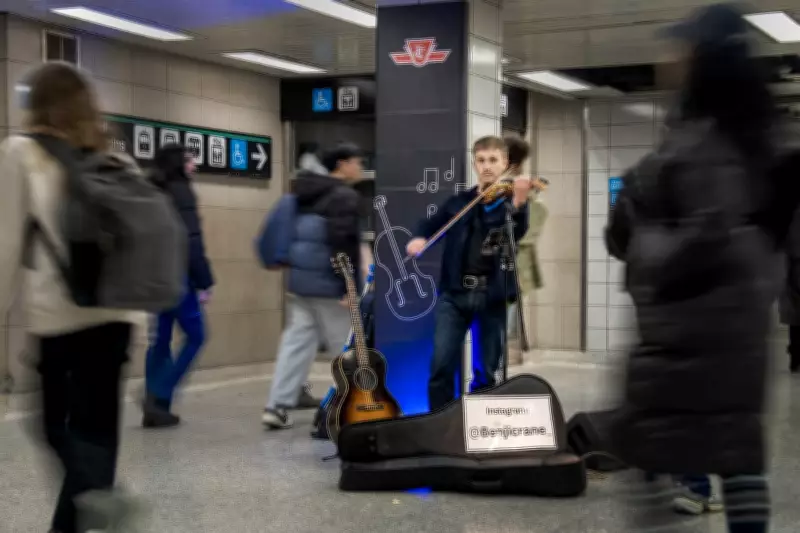
For many commuters in Toronto, the daily rush hour is a stressful race against time. But for those passing through stations like Dundas West, a moment of musical respite awaits. Musician Benji Crane, who regularly performs at the Dundas West subway station, describes his work as 'one of my joys.' Crane is part of a vibrant community of subway musicians who bring rhythm and melody to the city's underground transit network.
Who Are the Subway Musicians?
These performers come from diverse backgrounds—some are professional musicians, others are hobbyists or students. They are licensed through the Toronto Transit Commission's (TTC) busking program, which allows them to perform in designated areas. The program has been running for decades and has launched the careers of several notable artists.
Benji Crane, for instance, started playing guitar in subway stations as a way to share his music and connect with people. 'It's a unique audience,' he says. 'You get everyone from business executives to tourists, and they all react differently. Some smile, some dance, some just stop and listen for a moment. It's incredibly rewarding.'

The Impact on Commuters
Research has shown that live music in public spaces can reduce stress and improve mood. For rush-hour commuters, the presence of a musician can transform a mundane commute into a memorable experience. Regular commuters often become familiar with their favorite performers, creating a sense of community underground.
'I see the same people every week,' says Crane. 'They wave, they tip, sometimes they request songs. It's a small but meaningful connection in a city that can feel impersonal.'
Challenges and Rewards
Subway musicians face unique challenges, including noise from trains, unpredictable crowds, and the occasional unappreciative listener. However, the rewards often outweigh the difficulties. Many musicians use the subway as a testing ground for new material or as a source of income while pursuing other projects.
The TTC's busking program has strict rules to ensure safety and minimize disruption. Musicians must audition, obtain a permit, and adhere to volume limits. Despite these restrictions, the program has flourished, with dozens of performers active across the system.
Beyond the Music
For some, subway performances are a stepping stone to larger stages. Several Canadian artists, including singer-songwriter Ron Sexsmith, began their careers busking in Toronto's subway. The informal setting allows musicians to hone their craft and build a following without the pressure of a formal venue.
'It's a great way to learn how to read an audience,' says Crane. 'You have to adapt quickly, keep their attention, and leave them wanting more. Those are skills that apply anywhere.'
Looking Ahead
As Toronto's transit system expands, so does the opportunity for subway musicians. The TTC has expressed interest in expanding the busking program to new stations and offering more performance slots. For now, performers like Benji Crane continue to brighten the daily commute, one song at a time.
'Every day is different,' he says. 'But the joy of making music and seeing people smile never gets old. It's one of my joys.'