A University of Calgary professor has been recognized with a prestigious national award for his leadership in developing an innovative three-dimensional mapping technology.
Pioneering Work in Digital Cartography
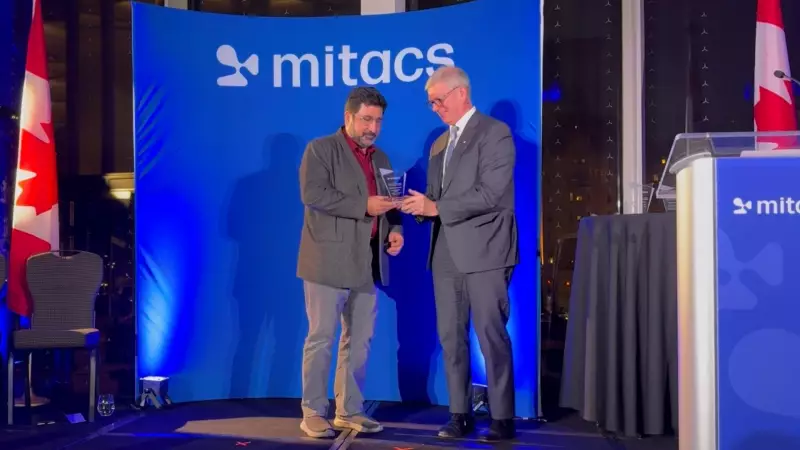
Faramarz Samavati, a professor in the Department of Computer Science at the University of Calgary, is the recipient of the Mitacs Innovation Award for Outstanding Research Leadership. The award, announced on December 05, 2025, honours his significant contributions to the creation of a novel 3D digital mapping system.
Mitacs, a not-for-profit organization that fosters growth and innovation in Canada by solving business challenges with research solutions from academic institutions, bestows this award to individuals who demonstrate exceptional leadership in research with tangible impacts.

Impact and Applications of the Technology
Samavati's work goes beyond traditional two-dimensional maps, creating dynamic, interactive three-dimensional models of physical spaces. This technology has broad potential applications across numerous sectors.
The system could revolutionize urban planning, architectural design, and infrastructure management by providing highly accurate digital twins of cities and landscapes. Other fields poised to benefit include environmental monitoring, where tracking changes in terrain or forest cover becomes more precise, and cultural heritage, allowing for the detailed digital preservation of historical sites.
The research, conducted at the University of Calgary, exemplifies how academic innovation can lead to practical technological solutions with national and global relevance.
A Recognition of Research Leadership
The Mitacs award specifically highlights Samavati's role in research leadership. This involves not only the technical development of the mapping system but also guiding research teams, securing funding, and collaborating with industry partners to ensure the research translates into real-world use.
This accolade underscores the University of Calgary's strength in cutting-edge technological research and its contribution to positioning Canada as a leader in the digital economy. The work on advanced 3D mapping systems places Alberta, and Calgary specifically, at the forefront of geospatial technology innovation.
Professor Samavati's achievement brings well-deserved attention to the critical work being done in Canadian universities to solve complex problems and drive future industries.