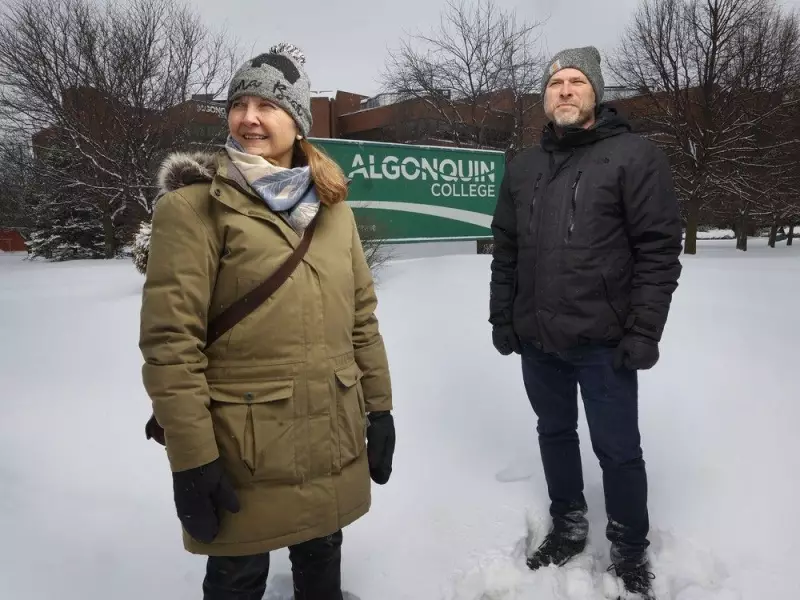
Algonquin College Journalism Program Faces Elimination Amid Budget Cuts
Algonquin College is considering the elimination of its journalism program as part of a broader series of budget reductions, marking the second consecutive year of significant program cuts at the institution. The journalism program, which has trained numerous media professionals for decades, is one of thirty programs administrators have proposed cutting this fall.
Faculty and Students Rally to Save Storytelling Education
Jon Willing, co-coordinator of the journalism program and a veteran journalist with experience at the Ottawa Sun and Ottawa Citizen, received the devastating news via email on January 22 while en route to teach a class. Despite the shock, Willing and his students at the Algonquin Times—the program's hands-on laboratory publication—immediately sprang into action, covering the proposed cuts with professional rigor.
"It's not a reflection of what we've done and the quality, the excellence of the programming in the past," explained Algonquin president and CEO Claude Brulé in an interview. "It's a reality that we're facing today, where the programs can no longer be viably supported financially by the institution."

The Human Impact of Program Cuts
Students currently enrolled in the program expressed deep disappointment at the potential loss. Scott Crowell, who aspires to work in sports journalism, described his experience as thoroughly enjoyable, while Janella Ashford, aiming for advocacy journalism, noted the program's vital role in community storytelling.
Julie McCann, the program's other co-coordinator, emphasized that journalism education extends far beyond traditional newspaper reporting. "There are a lot of candidates looking to enter a journalism-adjacent career in areas like independent publishing, content creation, video storytelling and podcasting," McCann explained, highlighting how the program teaches essential skills including bravery, collaboration, curiosity, multitasking, and entrepreneurship.
Broader Context of Journalism Education Decline
The proposed cuts at Algonquin reflect a troubling trend across Ontario's post-secondary institutions. Last year, Durham, Sheridan, and Centennial colleges all eliminated journalism programs, while Humber College reduced its journalism streams. This erosion of media training programs coincides with a documented decline in local journalism outlets across Canada.
According to a July report from the Canadian Centre for Policy Alternatives, Canada experienced a net loss of approximately 25 print outlets annually throughout most of the 2010s, with that number skyrocketing to 83 outlets lost in 2023 alone. This creates a concerning cycle where fewer training programs produce fewer journalists to serve communities already experiencing news deserts.
The Fight to Preserve Essential Skills
Willing passionately defended the value of journalism education, describing it as "fast-paced fun" that allows students to engage with their communities, inform audiences, and tackle new challenges daily. Despite the potential program elimination, faculty and students continue to demonstrate the very skills they teach—reporting on difficult developments while advocating for the preservation of storytelling education.
As Algonquin College administrators finalize their decisions this fall, the journalism program's supporters argue that cutting such training represents surrendering to financial pressures rather than adapting essential education for the digital age. They maintain that the world still needs skilled storytellers, now more than ever, across multiple platforms and formats.