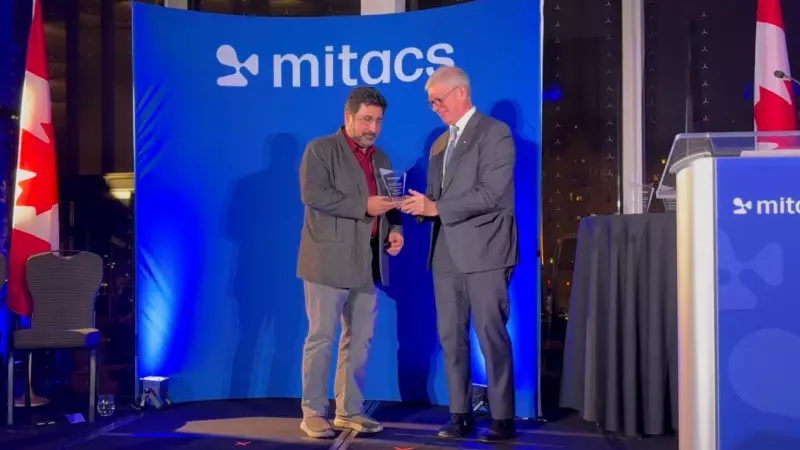
A distinguished professor from the University of Calgary has been honoured with a significant award for his pioneering work in developing a sophisticated three-dimensional digital mapping system. The recognition highlights a major advancement in geospatial technology originating from a Canadian academic institution.
Recognizing Innovation in Geospatial Technology
The award, announced on December 5, 2025, celebrates the professor's creation of a complex system that generates detailed three-dimensional maps. This technology has far-reaching applications, from urban planning and environmental monitoring to resource management and virtual simulations. The development underscores the University of Calgary's role as a hub for cutting-edge technological research with practical, real-world utility.
The Impact of Advanced Digital Cartography
This 3D digital mapping system represents a leap beyond traditional two-dimensional maps. By creating immersive, scalable models of physical spaces, the technology allows for enhanced analysis and visualization. Experts suggest such systems are critical for smart city initiatives, disaster response planning, and cultural heritage preservation. The professor's work places Alberta, and Canada more broadly, at the forefront of this specialized field within computer science.

The accolade serves not only as personal recognition for the academic but also as a testament to the value of sustained research investment in Canadian universities. It demonstrates how academic inquiry can lead to tangible technological tools that address complex modern challenges.
A Canadian Contribution to a Global Field
While the original announcement was brief, the implication is clear: this award brings well-deserved attention to Canadian innovation. The University of Calgary computer science professor has contributed a vital tool to the global geospatial and digital twin ecosystems. As industries and governments increasingly rely on accurate, dynamic maps for decision-making, the foundational work done by researchers like this becomes ever more crucial.
This story is a reminder of the significant, yet often unsung, technological advancements emerging from Canada's post-secondary institutions. It celebrates the intersection of academic rigor and applied innovation, resulting in systems that have the potential to reshape how we interact with and understand our physical world.