University of Alberta Faces Legal Challenge Over Termination of Controversial Research Endowment
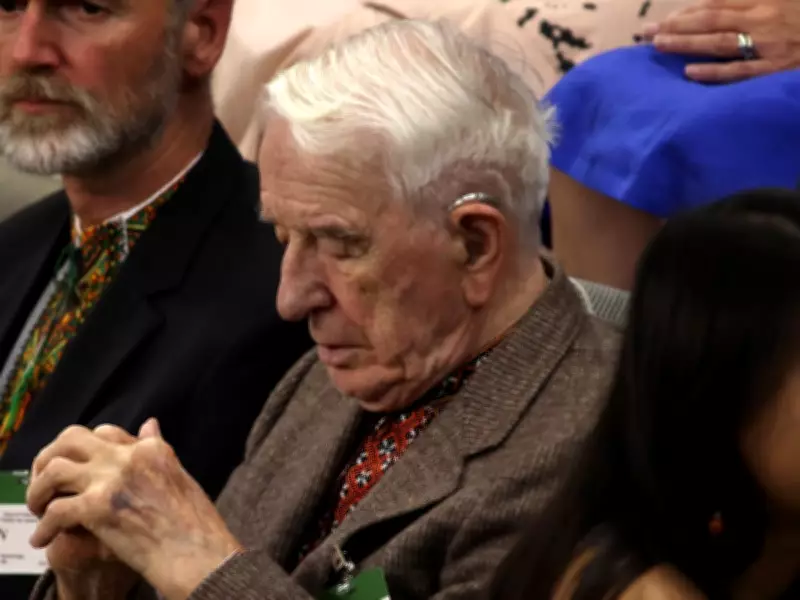
The University of Alberta is embroiled in a significant legal dispute as the son of a Ukrainian Waffen SS veteran fights to reinstate a terminated research endowment established in his father's name. Martin Hunka, whose 101-year-old father Yaroslav Hunka served in the Nazi Galicia Division during World War II, has taken the university to court over its decision to dissolve the Yaroslav and Margaret Hunka Ukrainian Research Endowment.
Background of the Controversial Recognition
The controversy traces back to September 2023, when Yaroslav Hunka received standing ovations in Canada's House of Commons during Ukrainian President Volodymyr Zelenskyy's visit. Then-Speaker Anthony Rota had invited Hunka, describing him as a hero who fought for Ukrainian independence against the Russians. This recognition sparked immediate international backlash when it was revealed that Hunka had served in the Galicia Division, a SS unit composed of Ukrainian volunteers that has been linked to war crimes.
The Friends of Simon Wiesenthal Center for Holocaust Studies strongly condemned Parliament's recognition of Hunka, while Russian President Vladimir Putin cited the incident to justify his invasion of Ukraine. The political fallout was substantial, with Rota ultimately resigning from his position and then-Prime Minister Justin Trudeau issuing a formal apology for the honor bestowed upon Hunka.

The University's Response and Legal Challenge
In the wake of this controversy, the University of Alberta moved to return a $30,000 donation that Martin Hunka had made to the Canadian Institute of Ukrainian Studies in 2019. This donation had established the Yaroslav and Margaret Hunka Ukrainian Research Endowment, which supported academic research into the Ukrainian Catholic Church.
Martin Hunka is now challenging the university's decision through legal channels, arguing that the institution failed to follow proper legal procedures when terminating the trust. In response to the university's court application to formally dissolve the endowment, Hunka is seeking its reinstatement through the Court of King's Bench, where Justice Debra Yungwirth is presiding over the case.
Arguments Presented in Court
In legal briefs submitted to the court, Hunka's legal team contends that the University of Alberta had full knowledge of Yaroslav Hunka's service in the Galicia Division when it originally accepted the donation. According to court documents, Jars Balan, then director of the Canadian Institute of Ukrainian Studies, conducted due diligence before accepting the gift and found no evidence linking Hunka to war crimes.
The legal brief from lawyers Julian Savaryn and Ian Mahood states emphatically: "This court should not enable the university—an institution of higher learning—to bend its knee impetuously to the unverified, unproven, and spurious allegations made by members of the public and media."
Furthermore, the legal team argues that "based on the available evidence, there is no valid reason for the university to seek to distance itself from Yaroslav, now 100 years old, for his unimpeachable participation as a young man of 18 years in the Second World War, seeking to defend his homeland of Ukraine."
Broader Implications and Context
This legal battle occurs against a backdrop of ongoing tensions regarding historical memory and how institutions should respond to controversial figures from wartime history. The case raises important questions about:
- The responsibilities of academic institutions when accepting donations
- The legal framework governing endowment terminations
- How historical figures with complex wartime records should be memorialized
- The intersection of public pressure and institutional decision-making
The University of Alberta's board of governors maintains that returning the donation was an appropriate response to the controversy surrounding Yaroslav Hunka's recognition in Parliament. However, Martin Hunka's legal challenge suggests this decision may have been made without proper consideration of the original agreement's terms or the due diligence conducted when the donation was initially accepted.

As this case progresses through the legal system, it will likely establish important precedents for how Canadian universities handle similar situations involving controversial donors and historical figures. The outcome could influence institutional policies regarding donor vetting, endowment management, and responses to public controversies involving historical figures associated with academic institutions.