The Hidden History Behind 'O'Clock': More Than Just Telling Time
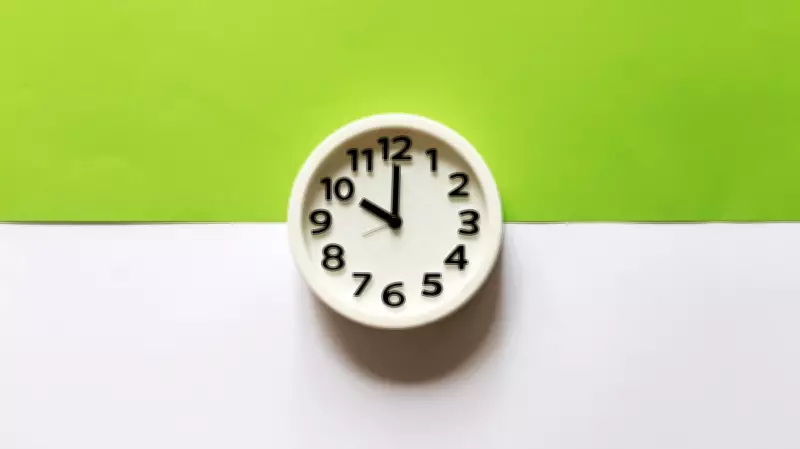
People use it countless times daily without a second thought – "two o'clock," "six o'clock," "eight o'clock sharp." But what does that peculiar "o'" actually represent? Is it an abbreviation for something specific? Why does this construction only apply to certain time expressions?
Medieval Origins of Timekeeping Language
The term "o'clock" traces its roots back much further than many realize, originating from medieval English phrases rather than modern contractions. According to Esteban Touma, a cultural and linguistic expert at Babbel, "When mechanical clocks became widespread across Europe during the 14th century, people needed terminology to distinguish clock-based time from other measurement methods like solar positioning or church bell signals."
"O'clock" represents a shortened version of the phrases "of the clock" and "of clock," which early clock users employed to specify they meant "according to the clock." Historical records show "ten of the clokke" appearing as early as 1384, with "eyghte of clok" documented in 1419. The contracted form "four oclock" first emerged in written evidence around 1560.

The Phonetic Evolution That Created 'O'Clock'
Michael Adams, an English professor at Indiana University, explains the phonetic reasoning behind this linguistic transformation: "With 'of,' the consonant sits at the front of the mouth while 'clock' positions at the back. English speakers naturally avoid excessive movement between these positions, leading to the contraction 'o'clock' replacing the fuller 'of clock' form."
Touma describes "o'clock" as "a linguistic fossil – a surviving fragment of a much longer medieval phrase no longer used in its complete form." The term became standardized during Early Modern English periods of the 16th and 17th centuries, maintaining consistent usage ever since.
Why 'O'Clock' Only Applies to Full Hours
This contraction represents a rare grammatical example that persists in one specific context: exclusively with full hours. "We only use 'o'clock' with complete hours – 'three o'clock,' 'six o'clock' – preserving the original phrase structure referencing numbered positions on clock faces," Touma notes. This explains why expressions like "four thirty o'clock" or "six fifteen o'clock" never developed naturally.
The linguistic phenomenon demonstrates what experts call "phonetic erosion," similar to transformations like "goodbye" evolving from "God be with ye" or "jack-o'-lantern" shortening from "Jack of the lantern."
Modern Adaptations and Cultural Variations
In contemporary usage, creative adaptations have emerged, including playful expressions like "martini o'clock" and the popular "it's five o'clock somewhere" justification for early drinking. "Language constantly shifts with culture, technology, and daily life," observes Madeline Enos, a language trends expert at Preply. "What feels innovative today can become second nature tomorrow – that's language's beautiful adaptability."
Touma highlights fascinating cross-linguistic comparisons: "French and Italian often express time relative to the next hour – 2:45 becomes 'three minus a quarter.' Meanwhile, Germans say 'halb vier' (half four) for 3:30, literally meaning halfway to four. These contrast with English's straightforward 'three thirty' or 'half past three,' demonstrating how even universal concepts like time-telling vary culturally."
A Linguistic Marker of Technological Revolution
The emergence of "o'clock" represents a broader vocabulary shift accompanying significant technological advancement. "Mechanical clocks in the 14th century created demand for more precise timekeeping language," Touma explains. "'O'clock' serves as a linguistic artifact marking when time measurement transitioned from natural methods to machine-based systems."
This small but persistent contraction offers a remarkable window into English language evolution, demonstrating how technological innovation, phonetic practicality, and cultural adaptation intertwine to shape everyday communication across centuries.