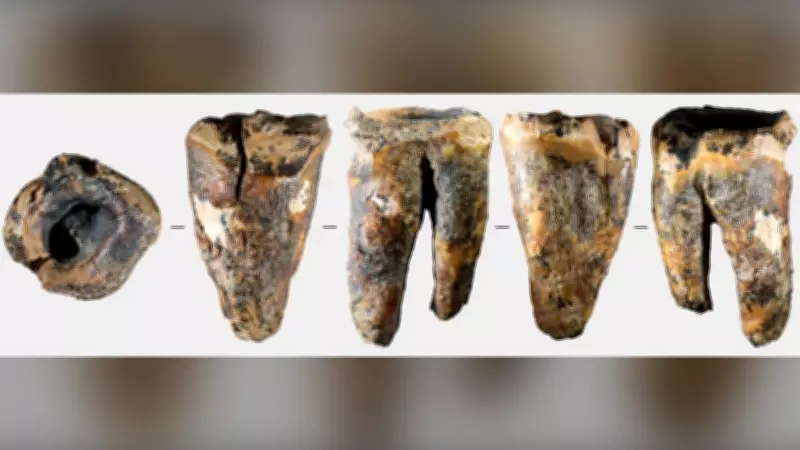
A 59,000-year-old Neanderthal tooth discovered in a cave has provided scientists with a remarkable glimpse into the medical capabilities of our ancient relatives. The tooth, which features a deep hole where a cavity was removed, suggests that Neanderthals possessed knowledge of dental procedures far more advanced than previously thought.
Discovery and Analysis
The fossilized tooth was unearthed at an archaeological site and analyzed by a team of researchers led by Dr. Zubova. Their findings, published in the journal PLOS One, indicate that the cavity was deliberately drilled and cleaned, likely using a sharp stone tool. This procedure would have required precision and an understanding of infection control.
Implications for Neanderthal Medicine
This discovery challenges the stereotype of Neanderthals as primitive beings. It demonstrates that they had sophisticated medical knowledge, including the ability to treat dental pain and prevent further decay. The tooth shows signs of healing, suggesting the individual survived the procedure and lived for some time afterward.

The study adds to a growing body of evidence that Neanderthals engaged in complex behaviors, such as caring for the sick and injured. Other findings have included evidence of medicinal plant use and even surgical procedures.
Broader Context
This tooth is not the only example of prehistoric dental care. Similar evidence has been found in other Neanderthal and early human sites, but this specimen is particularly well-preserved. The researchers hope that further analysis will reveal more about the tools and techniques used.
The discovery underscores the importance of continued archaeological research in understanding the evolutionary history of medicine. It also raises questions about how Neanderthals transmitted such knowledge within their communities.