UQAM Professors Face Uncertain Future After Quebec Scraps Immigration Program
Twenty-five professors at the Université de Québec à Montréal (UQAM) may be forced to leave the province following Quebec's decision to abolish the Programme de l'expérience Québécoise (PEQ), their union announced on Thursday. The move has created significant uncertainty for these educators and their families, with many expressing feelings of abandonment by the provincial government.
Union Calls for Grandfather Clause Implementation
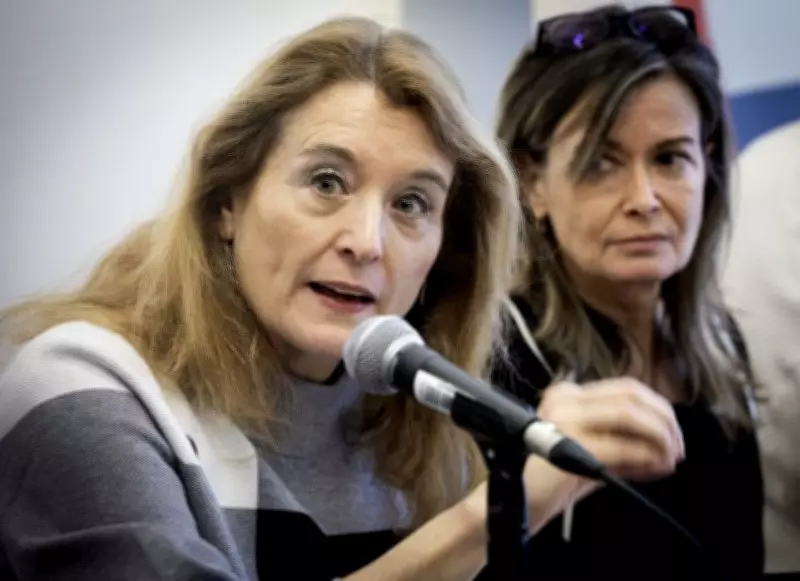
The Syndicat des professeurs et professeures de l'UQAM-CSN has joined a growing coalition of groups urging Quebec to implement a grandfather clause for temporary foreign workers who had planned to pursue permanent residency through the now-defunct program. Union president Geneviève Hervieux described the program's termination as "disastrous" for the university during a press conference.
"These are people with exceptional professional backgrounds and highly-specialized knowledge," Hervieux emphasized. "They are integrated into teaching teams and research teams. They actively contribute to the UQAM community and Quebec society. And suddenly, everything collapses. Their professional lives are thrown into uncertainty. Courses will not be taught, field research will not happen, because they may have to leave."

Program History and Current Alternatives
Launched in 2010 to retain foreign students and temporary workers by offering a fast track to permanent residency, the PEQ program officially ended in November 2025. The sole remaining pathway for these workers to seek permanent residency is now the Programme de sélection des travailleurs qualifiés (PSTQ), which has faced criticism for prioritizing regions outside Montreal.
CSN president Caroline Senneville, who participated in the press conference alongside Hervieux, noted that the PSTQ criteria disadvantage professors since Montreal serves as Quebec's primary university hub. The PSTQ process involves submitting a declaration of interest, with no guarantee of receiving an invitation to apply. Even receiving an invitation doesn't ensure selection for permanent residency, as decisions depend on various ranking factors including age, education level, and French language proficiency.
"The rules are unclear and they appear arbitrary," Senneville stated regarding the current immigration system.
Personal Stories of Uncertainty
Alejandro Morales Borrero, a mathematics professor originally from Colombia, represents one of the affected UQAM educators. He left a tenured position in the United States where he had permanent residency specifically to come to Quebec in 2023, attracted by the PEQ program's pathway to permanent status.
"My wife, who is French, works in communications at the Ste-Justine Hospital," Morales Borrero explained. "We are proud that our daughter attends French public school, and we are proud to work in Quebec's public health and education systems."
As director of the laboratory of combinatorics and mathematical computing, Morales Borrero's professional projects now face jeopardy due to the immigration uncertainty. "I left a permanent job in a country where we already had permanent residency because the PEQ offered a nearly certain pathway to start our lives here," he said. "We feel abandoned and disillusioned. As a mathematician, I solve problems every day — but I don't know if there is a solution for this one for my family."
Broader Impacts and Government Response
The City of Montreal has formally urged Quebec to reverse course through a declaration at a council meeting, joining mayors from other municipalities, employers, and community organizations calling for a grandfather clause implementation. "We are truly appealing to the government's sense of commitment," Senneville emphasized. "It made a promise to these people. And I'll tell you — because we've been working on this issue for a long time — I meet people who were born in Quebec who are not very proud of our society right now. And that hurts."

Another affected professor, who preferred to remain anonymous, revealed she would have been eligible for permanent residency in December 2025 if the PEQ hadn't been abolished just one month earlier. While she can continue working during an estimated eight-month wait for her work permit renewal, she cannot leave the country, preventing international conference attendance, fieldwork abroad, or family visits to Belgium.
"The uncertainty and lack of predictability are extremely difficult to live with every day," she confessed, adding that she feels the government changed the rules mid-game — a sentiment echoed by union representatives.
When asked about potential government reversal, Senneville expressed hope that continued pressure might yield results. "We've seen Mr. Legault say before, 'well, I made a mistake' or 'this was not the right decision,' and I think that he came out bigger when he did that," she noted. "I think this is the time to do that."
The Ministry of Immigration, Francization and Integration did not respond to media inquiries on Thursday. Last week, a ministry spokesperson indicated that a grandfather clause was not under consideration, leaving the affected professors in continued limbo regarding their futures in Quebec.