Women's Advocacy Groups Drive Lasting Change Through Education and Representation
Despite decades of progress toward gender equality, significant disparities in representation persist across various sectors of society. Women's organizations continue to play a crucial role in addressing these gaps through advocacy, education, and empowerment initiatives.
Persistent Gender Gaps in Employment
Recent data from Statistics Canada's 2026 report reveals ongoing imbalances in occupational representation. Management positions remain predominantly male at 63.2 percent, while only two sectors—health care at 79.7 percent and education at 69.2 percent—show higher female employment rates. These statistics underscore the continued need for targeted interventions to achieve workplace equity.
CFUW's Multifaceted Advocacy Approach
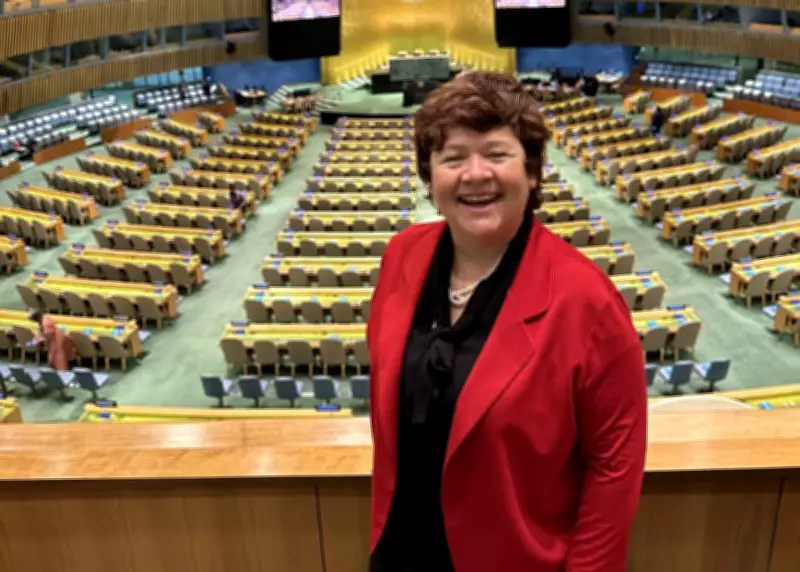
The Canadian Federation of University Women, with approximately 6,700 members nationwide, recognizes these divides and works collectively to promote equality through educational initiatives and women's empowerment programs. This year, CFUW representatives will participate in the 70th session of the United Nations Commission on the Status of Women, ensuring marginalized voices remain central to global discussions about women's rights.

Linda Sestock, national president of CFUW, and Grace Hollett, vice-president of international relations, will represent the organization at this important international forum, keeping women's rights at the forefront of changemakers' consciousness worldwide.
Educational Advocacy from Personal Experience
Grace Hollett's journey exemplifies the transformative power of education. Growing up in a one-room schoolhouse in Flat Island, Newfoundland, she developed an early fascination with learning processes. At Bishop Spencer College in St. John's, she discovered a natural aptitude for mathematics, encouraged by her principal, Evelyn Matthews, who recognized and nurtured her talents.
"She was so good at explaining things that you understood what you were doing. And she encouraged me," Hollett recalls of her mentor's influence.
After pursuing multiple education degrees at Memorial University, Hollett taught mathematics to students while simultaneously training future educators in effective teaching methodologies. During this period, she noted the gender imbalances within her field.
"Mathematics was not a typical subject for a lot of women at the time. I was working with the men mainly," she recounts of her early career experiences.
Addressing Systemic Imbalances
Through her work with the Newfoundland and Labrador Teachers' Association, Hollett helped identify significant gender divides among educators. The association worked to raise awareness among prospective teachers about these disparities while encouraging women to pursue careers in high school education and sciences, and men to consider primary and elementary teaching positions.
The organization also documented women's underrepresentation in administrative roles within educational institutions, highlighting the need for systemic changes beyond classroom teaching positions.
Hollett's experiences demonstrate how personal passion for education can evolve into broader advocacy for gender equity within professional fields. Her career trajectory illustrates the importance of mentorship, representation, and systemic intervention in creating more balanced educational environments.
As women's advocacy groups like CFUW continue their work, they emphasize that achieving true gender equality requires sustained effort across multiple fronts—from international policy forums to local educational initiatives. Through education, representation, and persistent advocacy, these organizations work to create lasting change that benefits not only women but society as a whole.