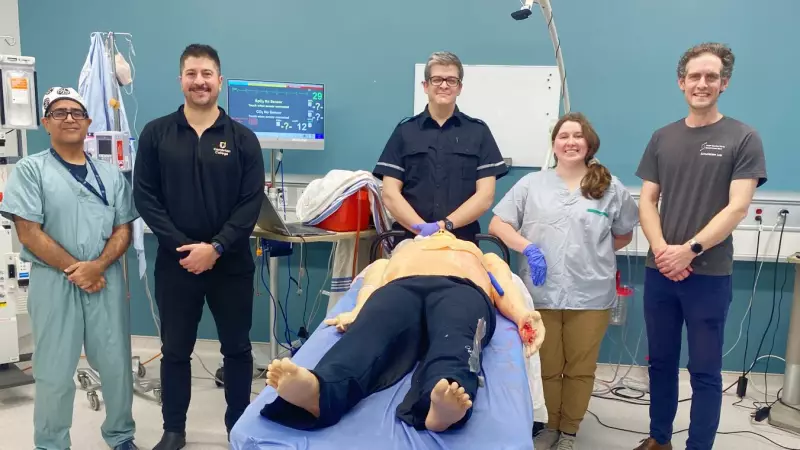
In a significant advancement for medical training in Northern Ontario, students from Cambrian College have developed a highly detailed anatomical doll equipped with a 3D-printed heart and lungs. This innovative tool is now being utilized in the simulation lab at Health Sciences North (HSN) in Sudbury to better prepare medical learners for specific surgical procedures.
A Hands-On Solution for Surgical Preparation
The new manikin, celebrated for its life-like qualities, was unveiled on December 05, 2025. It represents a collaborative effort between aspiring technologists and healthcare educators aimed at bridging a gap in practical training resources. The model's intricately designed internal organs provide an unprecedented tactile and visual learning experience for students and residents at the hospital.
The Technology Behind the Training Tool
Leveraging modern 3D printing technology, the Cambrian students meticulously crafted the cardiac and pulmonary structures. This approach allows for remarkable anatomical accuracy, replicating the size, texture, and spatial relationships of real human organs. The project underscores the growing role of advanced manufacturing and design in the healthcare sector, particularly in educational settings.

The doll is now a permanent fixture in HSN's simulation lab, a controlled environment where medical professionals can practice and hone their skills without risk to patients. This hands-on method is crucial for building competence and confidence before performing actual surgeries.
Implications for Future Medical Education
This initiative, led by the students under the guidance of their instructors and HSN staff, highlights several key benefits for the future of medical training in the region:
- Enhanced Learning: Provides a realistic, repeatable practice medium for complex procedures.
- Local Innovation: Demonstrates how college programs can directly contribute to solving real-world challenges in local institutions.
- Cost-Effective Training: Offers a durable, customizable alternative to some traditional, more expensive simulation models.
The introduction of this specialized manikin at Health Sciences North is expected to improve the quality of surgical training significantly. It empowers learners to make mistakes, learn from them, and ultimately deliver a higher standard of patient care. This project sets a precedent for further collaborations between academic institutions and healthcare providers across Canada, fostering a new generation of both medical professionals and medical technology creators.