Six Years After Pandemic School Closures: Over 115,000 Canadian Children Permanently Left Education
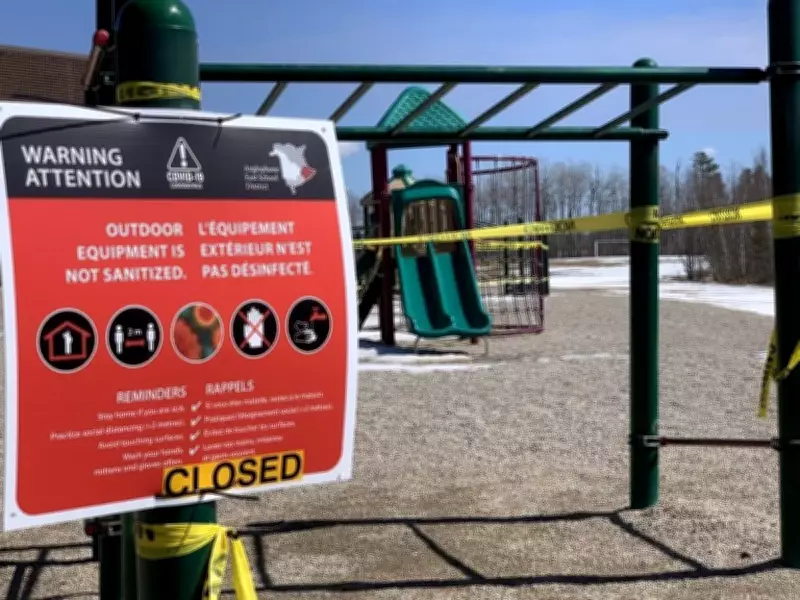
This week marks the somber sixth anniversary of the pandemic school closures that swept across Canada and the globe in 2020. What was implemented as an improvised policy response has evolved into what experts now describe as one of the most significant human catastrophes of the pandemic era. The lingering effects of this educational disruption continue to reverberate throughout Canadian society today, with profound consequences that demand urgent attention.
The Permanent Exodus: 115,000 "Third-Bucket Kids"
According to detailed calculations, well over 115,000 Canadian children from all age groups and diverse backgrounds have permanently defected from or been ousted from all forms of schooling as a direct consequence of the pandemic closures. These students, referred to as "third-bucket kids," were neither participating in virtual learning nor engaged in homeschooling as the closures persisted and eventually ended. Instead, they found themselves completely disconnected from any educational framework.
These children did not voluntarily leave the school system – rather, the educational system effectively abandoned them. From kindergarten through Grade 12, students who were firmly established in their educational journeys in March 2020 suddenly had the foundation of their learning and childhood pulled out from under them. The transition was abrupt and, for many, irreversible.

The Dual Crisis: Undereducation and Undersocialization
For the majority of Canadian students who remained within the formal education system during the closures, the experience proved deeply damaging. The combination of virtual schooling – a poor substitute for comprehensive school days filled with academic study, recess, sports, music, theater, social interaction, and mentorship – along with unpredictable starts and stops to in-person learning created two devastating social dynamics for Canada's youth.
Severe undereducation and gross undersocialization have become defining characteristics for many young Canadians who are now entering adulthood. The educational gaps created during this period have manifested in measurable academic declines, while the social development that typically occurs through school-based interactions has been significantly stunted.
Disproportionate Impact Across Socioeconomic Lines
Contrary to traditional dropout patterns, the pandemic-era educational exodus has affected children from all socioeconomic backgrounds. Among those permanently removed from schooling are children of white-collar professionals, professors, teachers, and even medical officials who advocated for the school closures. The poorest Canadian children have also been disproportionately represented among those ousted from education entirely.
Across the country, observers can now find young people in their late teens and early twenties who were forced to leave school during the closures in Grades 7 through 10, or even earlier, and have never returned. These are not classical "dropouts" in the traditional sense but rather casualties of a systemic failure that crossed all demographic boundaries.
Quantifying the Academic Damage
The latest standardized math test scores from Ontario, which represents approximately 40% of Canada's national student body of over five million students, reveal the extent of the academic damage. Ontario experienced the longest school closures in Canada – among the longest in North America – and the results are telling.
- Approximately half of Grade 6 students failed to meet provincial standards
- 42% of Grade 9 students failed to meet provincial standards
Paradoxically, while academic performance has declined, graduation rates with extremely high averages have reached unprecedented levels. This discrepancy raises serious questions about the meaning of academic achievement in a system where students have effectively lost two years of substantive education.

Societal Consequences and Youth Crime
The educational disruption has extended beyond academic performance into broader societal impacts. Experts point to increased youth involvement in criminal activities – including smash-and-grab robberies, homicides, carjackings, and break-and-enters – as potentially connected to the educational and social void created by prolonged school closures.
These developments cannot be dismissed as mere accidents of bail systems or problematic family backgrounds. Rather, they represent a fundamental breakdown in the structures that traditionally support proper Canadian upbringing and socialization. The two years of educational disruption represent a significant portion of childhood development, with effects that now permeate all aspects of young lives and society at large.
The Labor Supply Crisis and "Misery Gap"
Beyond immediate social concerns, the school closures have created a looming crisis in Canada's labor supply. While discussions often focus on youth unemployment and external factors like artificial intelligence or international trade policies, the more fundamental issue lies in how school closures have compromised the quality of future labor.
A "misery gap" has emerged between what Canada's post-pandemic, post-Trump future requires and the actual preparedness of its youth. This gap represents the distance between societal needs and the capabilities of a generation whose education was significantly disrupted – a gap created by policy decisions that failed to account for long-term consequences.
Technological and Social Barriers Exposed
The transition to virtual learning exposed multiple systemic weaknesses. A significant proportion of children lacked access to stable internet connections, while others struggled with language barriers once online. Some students found themselves trapped in abusive home environments that became increasingly dangerous as closures persisted.
Perhaps most insidiously, online schooling quickly lost meaning for teenagers whose educational experience had previously been centered around social connections, extracurricular activities, and school community. The barrier to leaving school became not physical walls or concerned educators, but simply a button or screen that could be switched off – and for many, that switch was permanent.
Lessons for Future Education Policy
The lessons from the pandemic school closures are both clear and counterintuitive. Canadian schools must remain open under nearly all circumstances, given their central role in society and future prospects. If closures become absolutely necessary, they must be extremely brief with firm, publicly announced return dates that are strictly honored.
Return to school should not be approached conservatively but rather with high energy and commitment to making up lost ground. The runway of childhood is objectively time-limited, and educational disruptions have lasting consequences that extend far beyond academic performance.
The "right to education" so valued in Canadian society was severely compromised during the pandemic closures. More fundamentally, society has a sacred duty to educate its youth – a duty that must be defended and delivered consistently to ensure Canada's future prosperity and social cohesion.
As the nation reflects on six years since the initial closures, the imperative is clear: this educational catastrophe must never be repeated. The wellbeing of Canada's children and the future of the nation depend on learning from these mistakes and implementing policies that prioritize educational continuity above all else.