Expanding School Options Crucial for Managing Complex Classroom Challenges
Finance Minister and Treasury Board President Nate Horner presented Budget 2026 on Thursday, revealing a significant 7.2 percent increase in Alberta's education operational fund, bringing it to $10.8 billion for the 2026-27 fiscal year. However, this substantial investment comes alongside a projected provincial deficit of $9.4 billion, highlighting the financial pressures facing the education system.
The Core Problem in Alberta Education
The past six months in Alberta have made one undeniable fact clear: there is a significant problem with education in the province. While most stakeholders can agree on the existence of this problem, finding effective solutions has become a source of passionate and divisive debate across communities.
During the October strike, the Alberta Teachers' Association repeatedly emphasized that they would not be satisfied until concrete caps on classroom sizes were implemented. This demand has become a central point of contention in education discussions.

Research Challenges Conventional Wisdom on Class Size
Contrary to popular belief, research from New Zealand education academic John Hattie indicates that factors like reduced class size have a much smaller, sometimes negligible, effect on student achievement compared to teacher expertise and pedagogical practices. This important finding suggests that teachers can effectively teach larger classes when they employ strong instructional methods and maintain professional excellence.
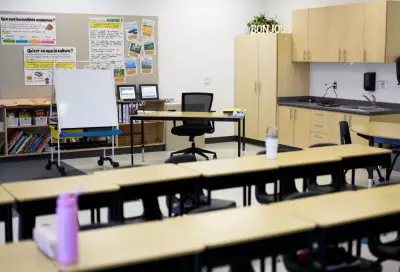
Where large class sizes become particularly problematic is when combined with a high number of students who have complex learning and behavioral needs. Constant interruptions and concerns for student safety can create teaching conditions that border on impossible, regardless of class size limitations.
The Screen Time Crisis and Its Classroom Impact
Research continues to demonstrate the negative effects of excessive screen time on developing brains. Increased digital use coincides with decreased engagement with nature and real-life social interactions. This trend obstructs children's ability to interpret and regulate emotions, fuels aggressive conduct, and generally harms their psychological health and development.
Unfortunately, teachers have no control over the amount of screen time their students access while at home. Too often, students arrive at school bleary-eyed and dysregulated after long nights of gaming and social media scrolling. Both teachers and students pay the price for this digital overload, as managing children who struggle to focus and interact with peers becomes a logistical nightmare in classroom settings.
School boards should be making concerted efforts to educate and equip parents about the effects of excessive screen time. Only through raising awareness and helping families establish healthy boundaries can the screen time crisis be effectively managed. Families play a crucial role in managing and reducing digital consumption among children.
Specialized Programs: A Potential Solution
The CBC recently conducted a comprehensive survey with participation from more than 6,000 teachers across Alberta. One particularly interesting finding revealed that the vast majority of teachers (89 percent) agreed that there were children in regular classrooms today who would be better served in specialized programs designed for students with needs similar to their own.
Often, public arguments are made that all children, regardless of their specific learning or behavioral needs, should be fully integrated into properly funded public education classrooms. Yet, the CBC survey also showed that teachers are evenly split in their support of this inclusive approach, suggesting that more nuanced solutions may be necessary.
This data points toward the potential value of expanding school options and specialized programs as a key strategy for addressing classroom complexity. Rather than focusing exclusively on class size caps, educational policymakers might consider developing more diverse learning environments that can better serve students with varying needs.